
Native Plant Landscaping in St. Louis: How a Chesterfield Hillside Became a Prairie
A prairie looks effortless. Tall grasses moving in the breeze, wildflowers scattered across a hillside, butterflies drifting from bloom to bloom. Getting there takes more planning than it looks.
One of our clients in Chesterfield found that out firsthand. They had tried planting a few native wildflowers on their own and quickly saw how tricky it can be to get a prairie to take hold. So we sat down together and came up with a bigger plan: turn their entire hillside into a Missouri native prairie.
Here’s how we brought it to life, and what we learned along the way about native plant landscaping in St. Louis.
Why native plants make sense in St. Louis
Native plants are the ones that grew here long before lawns and imported shrubs arrived. They’ve had a very long time to get used to our hot, humid summers, our cold snaps, and our heavy spring rains. That gives them a real edge in a St. Louis yard.
- They handle our clay soil. Many prairie plants send roots much deeper than turf grass, which helps them push through heavy clay and ride out dry stretches in August.
- They help with stormwater. Those deep roots open up the soil so rain soaks in instead of running off. On a slope, that matters.
- They feed pollinators and birds. Monarchs, native bees, and songbirds depend on the plants they evolved with.
- They ask for less once established. Less watering, little to no fertilizer, and no weekly mowing.
- They change with the seasons. Spring green, summer color, fall gold, and seed heads that look beautiful under frost.
The project: a native prairie on a Chesterfield hillside
The property sits right along a golf course, with a wide hillside facing the fairway. Our client wanted wild native flowers, and they wanted the whole slope to feel like a natural part of the landscape.
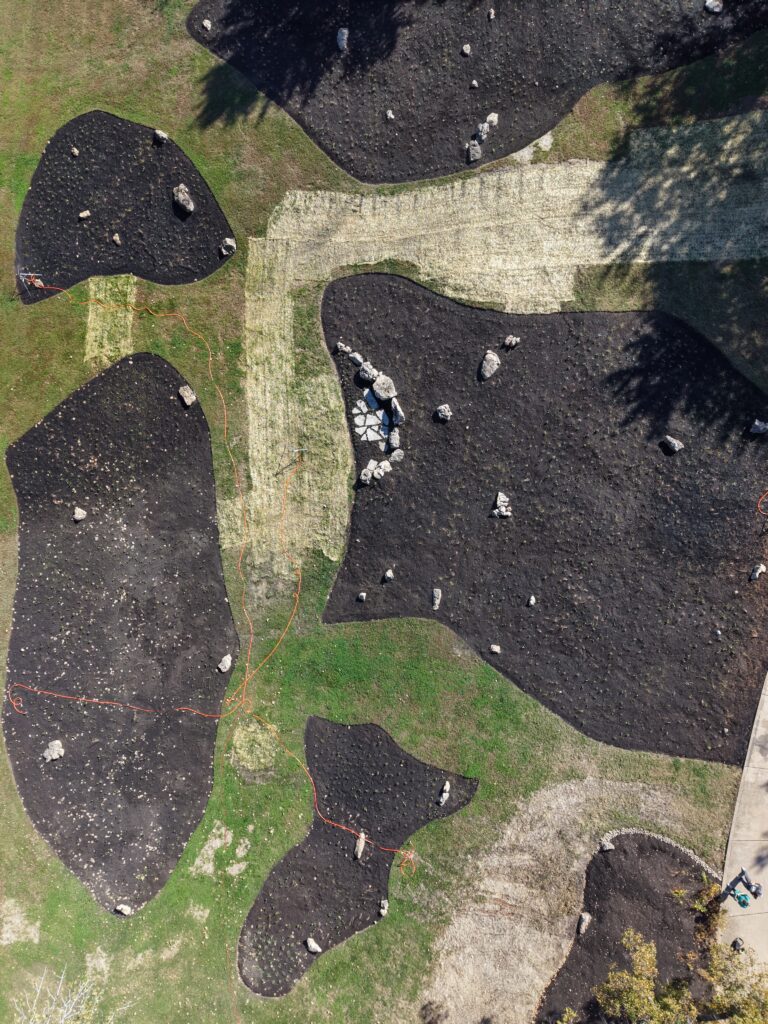
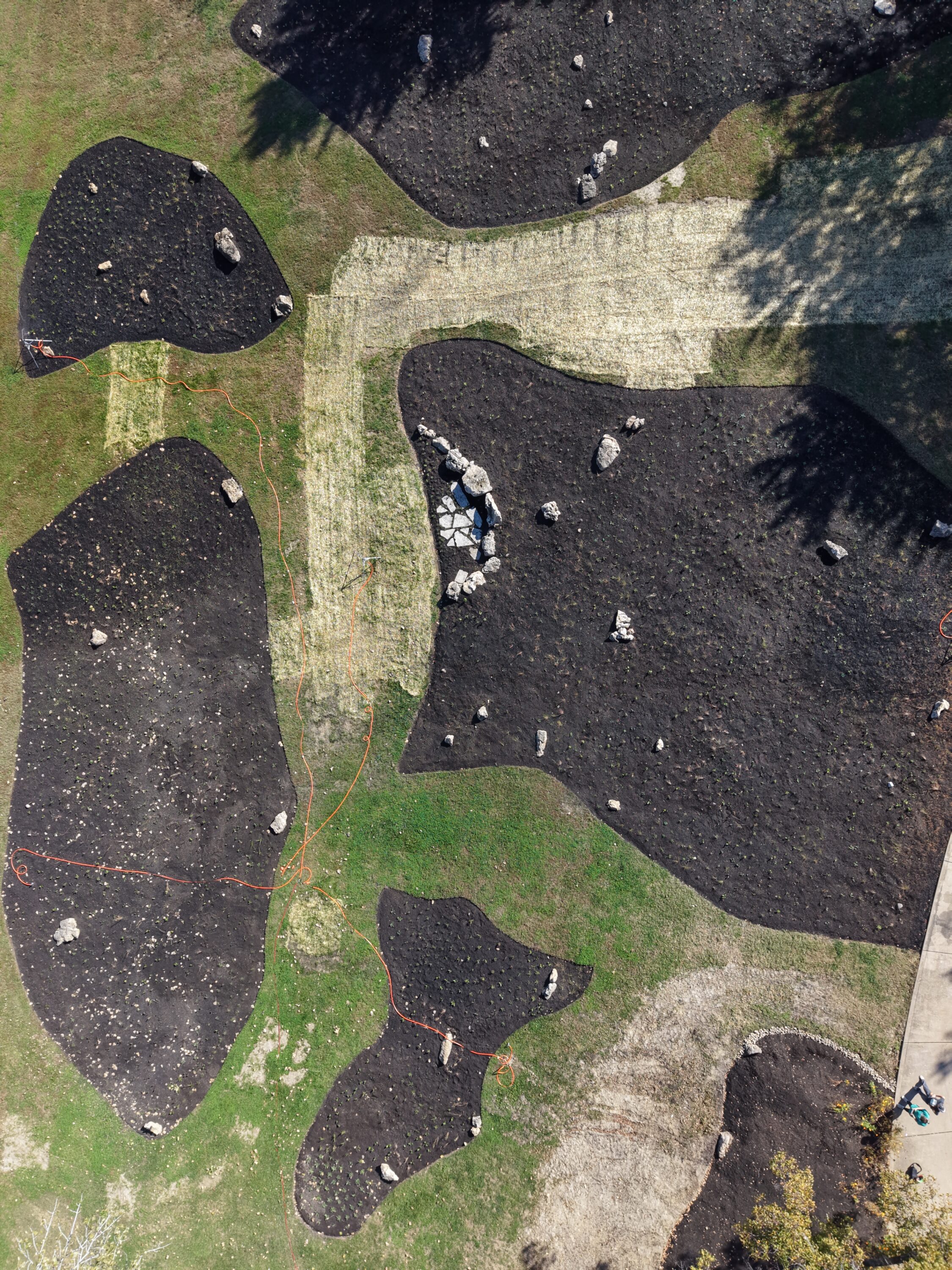
Michelle, the landscape consultant on the project, designed a plan built around pockets of different Missouri native plants spread across the hill. Under the existing trees, she designed a separate understory prairie suited to the shade. Both areas help soak up water on the slope, and both give golfers a beautiful view as they play past.
We also made use of what was already there. Boulders on the property were upcycled and worked into the prairie, so they look like they’ve always belonged.
On install day, Wayne, our project manager, and Josh, our operations manager, mapped out exactly where each planting pocket and path would go before a single plant went in the ground. As Michelle put it on site, “If you’re ever driving by and see a really awesome prairie, it’s probably this one.”
Designing a prairie you can actually live with
A prairie should feel wild. Living with one shouldn’t feel like a chore. A lot of the design work on this project went into the practical details that make the space easy to use and enjoy.
- Paths sized for real equipment. Walkways wind through the prairie, wide enough for the mower and the client’s golf cart.
- No hard turns. Every curve was laid out so a golf cart can glide through without a three-point turn.
- Connected to the gate. The paths line up with an existing gate, so moving between the yard and the course feels natural.
- Thoughtful views. As you walk the paths, each stretch was planned around what you’ll be looking at.
- A place to sit. We’re adding a few chairs out in the prairie so the family can sit, slow down, and feel like they’re out in nature.
Defined paths and edges also do something else: they show neighbors that a native planting is intentional, not overgrown.

Grown for this site by Pure Air Natives
Great prairies start with healthy plants. For this project we partnered with Pure Air Natives, a St. Louis native plant nursery that specializes in Missouri ecotype seed and plants.
They grew the plants for this prairie all summer long, giving them the nutrients and care they needed to arrive strong and well-rooted. Working with a local grower means every plant started life in our climate, which gives it a better shot at thriving once it’s in the ground.
Why fall planting gives native plants a head start
The prairie went in this fall, and that timing was on purpose. Fall is one of the best times to plant natives in St. Louis.
The soil is still warm, the air is cooler, and the fall rains do a lot of the watering. Plants can put their energy into roots instead of fighting summer heat. By the time spring arrives, they’re settled in and ready to grow.
Right now the prairie is planted and finished, but it won’t look full until spring. That’s normal. Native gardeners like to say that in year one the plants sleep, in year two they creep, and in year three they leap. Planting in fall gives this prairie a full season’s head start on that timeline, and we can’t wait to see it fill in.
Thinking about native plants for your own yard?
You don’t need a hillside to start. A few things we keep in mind on every native planting:
- Start with the site. Sun, shade, slope, and drainage decide which plants will thrive. A shady spot under trees needs a different mix than an open, sunny bank.
- Plant in groups. Pockets and drifts of the same plant look intentional and make a bigger impact than scattered singles.
- Plan how you’ll move through it. Paths, mowing edges, and seating turn a planting into a space you’ll actually use.
- Choose locally grown plants. Plants raised in our region are already adapted to St. Louis weather and soil.
- Be patient the first couple of years. Expect some weeding while the plants establish. After that, they largely take care of themselves.
- Leave stems up for winter. Seed heads feed birds and give native bees a place to overwinter.
A few Missouri natives that tend to do well in St. Louis yards include purple coneflower, black-eyed Susan, butterfly milkweed, wild bergamot, blazing star, little bluestem, and prairie dropseed. The right mix for your yard depends on your site.
Native plant landscaping FAQ
What is native plant landscaping? It’s designing with plants that naturally grew in your region before European settlement. In St. Louis, that means Missouri natives like coneflowers, milkweed, and prairie grasses.
When is the best time to plant native plants in St. Louis? Fall and spring both work well. Fall planting gives roots time to settle in before summer heat, so plants get a head start the following year.
Are native plants low maintenance? Once established, yes. They need less water, little or no fertilizer, and no weekly mowing. The first two or three years take more attention, mostly weeding and occasional watering in dry spells.
How long does a native prairie take to fill in? Most plantings look noticeably fuller by the second year and come into their own around year three.
Will a native garden look messy? Not when it’s designed well. Defined paths, clean edges, and plants grouped in pockets keep it looking intentional.
Can I add native plants to a smaller yard? Absolutely. A single bed, a sunny border, or a low spot that stays wet after rain can all be great places to start.