
Water decides what lasts on a property
St. Louis sits on heavy clay, and our spring storms drop a lot of rain at once. When that water has nowhere to go, it finds the foundation, the patio base, and the roots of trees you've spent twenty years growing.
Left alone, it shows up as a damp basement, a heaved walkway, or a bed that washes out every April. Good drainage solutions in St. Louis start with a proper diagnosis, not a guess and a trench.
We walk the whole property, find the source, and give you one plan that takes care of it. You don't have to manage any of it.
Drainage solutions we install
The right fix for St. Louis clay depends on where the water starts and where it can safely go. Most properties need more than one.

French drains
A stone-filled trench with perforated pipe that collects water from a wet lawn or bed and carries it off. Best where the ground stays soggy.
Channel drains and catch basins
Grated drains that catch surface water where it lands: across a driveway, at a patio edge, or at a low point in the lawn.
Downspout extensions and buried outlets
Roof water piped underground to a pop-up emitter or dry well, well clear of the foundation. Often the first fix we make.
Grading and regrading
Soil reshaped so the ground falls away from the house, with shallow swales that steer water around it.
Dry creek beds
A stone channel that carries storm flow through the yard and looks like it belongs in the planting.
Erosion control and retaining walls
Slopes held with plantings, stone, or a wall built to drain behind it, so it doesn't lean in ten years.
Permeable pavers
Terraces and drives that let rain soak through the joints into a stone base instead of running toward the house.
Drainage projects we've built
Signs of drainage problems
Most yard drainage trouble announces itself slowly. These are the four we see most on properties in Ladue, Clayton, and Town and Country.
Standing water and soggy lawn
Ground still spongy two days after rain, or a puddle in the same spot every storm. The grade is sending water the wrong way.
Erosion and washout
Mulch in the drive, soil across the patio, a gully at the foot of a slope. On steep ground, retaining walls are often part of the fix.
Basement moisture
Damp walls, a musty smell, or water at the floor line after a storm. It usually starts outside, with roof water aimed back at the house.
Plants that keep struggling
Shrubs that fail in the same bed year after year. Roots sitting in wet clay can't breathe, and replanting won't change that.
Why Choose Quiet Village Landscaping?

A Precise Approach
We use advanced tools like a smart level system to digitally measure grade and ensure water flows exactly where it should. No guesswork, just accurate, data-backed decisions that prevent future issues.
A Process That Gets It Right the First Time
1) Identify where water is collecting, and where it shouldn’t be.
2) Determine where the water is coming from.
3) Design a plan to redirect it effectively.
Built for Long-Term Performance
Not temporary fixes. As Rene mentions, we install smooth-walled PVC piping, not corrugated pipe, so water flows more efficiently, prevents debris buildup in low spots, and lasts significantly longer than standard corrugated systems.
Thoughtful Installation That Protects Your Landscape
We work carefully around planting beds and existing features, install downspouts in a way that prevents soil disruption and erosion, and design systems that integrate cleanly into your property.
Proactive Detailing
We add rock beds beneath downspouts to prevent pooling and mosquitoes, include proper drainage outlets to avoid water buildup near foundations, and perform leaf screens and ongoing maintenance to keep systems functioning properly.
You don't have to manage multiple contractors or second-guess the solution. With Quiet Village, it's handled—completely and correctly.
Our drainage assessment process
You don't need to know what's wrong. Finding it is our job.
We walk the property
Ideally during or right after rain, so we can watch where the water actually goes.
About 90 minutes
We map the flow
We shoot the grades, trace every downspout, and find the source, not just the symptom.
Same visit
You get one clear plan
Each fix drawn on your property plan, with what it does and why it belongs there.
Within a week
Permits and utilities, handled
We call in utility locates and pull any permits your municipality needs before we dig.
One to two weeks
How we build drainage that lasts
A trench sloped toward its outlet, lined with filter fabric, bedded in washed stone, with perforated pipe inside. The fabric keeps clay out of the pipe, which is where most failed drains go wrong.
Channel drains run along a hard edge like a driveway or patio. Catch basins collect water at a single low point. Both feed solid pipe, so nothing leaks back out along the way.
At a daylight outlet, a pop-up emitter, a dry creek bed, or a dry well where there's nowhere to send it. We never move the problem onto a neighbor's property.
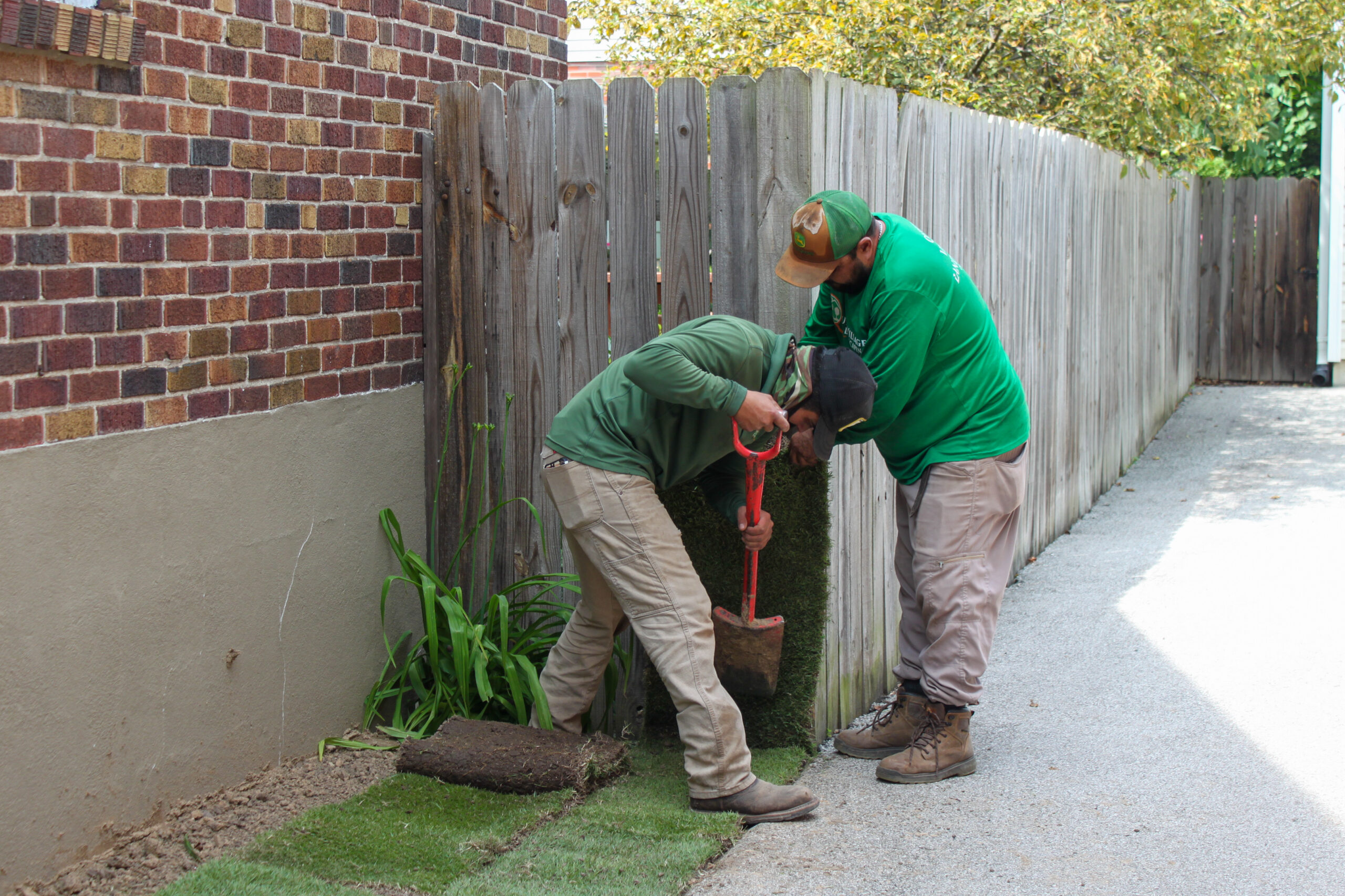
The trench line is disturbed for a few days. We cut and roll sod where we can, keep the crew to one path, and regrade and reseed before we leave.
Permeable pavers let rain soak into the stone base under a terrace or drive, so new outdoor living space doesn't add runoff. They're worth it anywhere a patio sits uphill of the house.
Once a year we flush the lines and clear the emitters and grates, usually in fall after the leaves drop. Clients on a maintenance program get it as part of a regular visit.
Begin with an outdoor living assessment
Every property starts with a walkthrough and a conversation. We'll learn your goals, look at the landscape, and recommend the level of care that actually fits.