
You hear it before you see it
A water feature does something no other part of a garden does. It covers the street. It gives you a reason to sit on the side of the yard you never use. And it is the only landscape element people notice with their eyes closed.
Sound is a design decision, not a side effect
We start from where you plan to sit and work backwards. A short drop onto gravel is a whisper you notice only when the conversation stops. A two-foot fall onto stone is enough to cover traffic from a nearby road. How a feature sounds comes down to three things: how far the water falls, what it lands on, and how wide the spill is.
Water feature benefits
A water feature is the smallest thing we build that changes a yard the most. It works on a courtyard the size of a parking space and on an acre alike, and unlike most garden elements it earns its keep in every season. Set it where it can be heard from the patio and from the windows you leave open.
It covers the neighborhood
Traffic, the pool pump next door, the dog three houses down. Moving water masks all of it better than a fence does.
It brings the yard to life
Birds find water within days. A garden with a feature in it has more happening in it, all year.
It fits where nothing else does
A slope you cannot mow, a narrow side yard, a blank corner by the door. Water turns awkward ground into the best part.
It works in winter too
Run it cold and you get ice forming on the stone, which is one of the better things to look at from inside in January.
Eight ways to put water in a garden
Which one is right depends on the room you have, the sound you want, and how much of the water you want to be able to see.
Pondless Waterfall
The one we build most. All the sound, a small pond of open water.
Koi Pond
A real pond with real fish. The most rewarding and the most involved thing on this list.
Ecosystem Pond
Planted to balance itself, so the plants do most of the filtering rather than equipment.
Bubbling Boulder
One drilled stone, water welling over the top. The simplest way in, and it suits a front entry.
Spillway into a Pool
A sheet or scupper falling into the pool, so it has something to say when nobody is swimming.
Reflecting Pool
Still water, held level, doubling the sky and whatever stands beside it. Formal and very quiet.
Urn Fountain
A single vessel on a hidden basin. Fits a courtyard, and it can be drained and stored for winter.
Basalt Columns
A cluster of vertical stones, water bubbling over the tops and running down the faces. Suits a modern yard.
Not sure which? Tell us where you sit and what you want to stop hearing, and we will narrow it down.
Custom design options
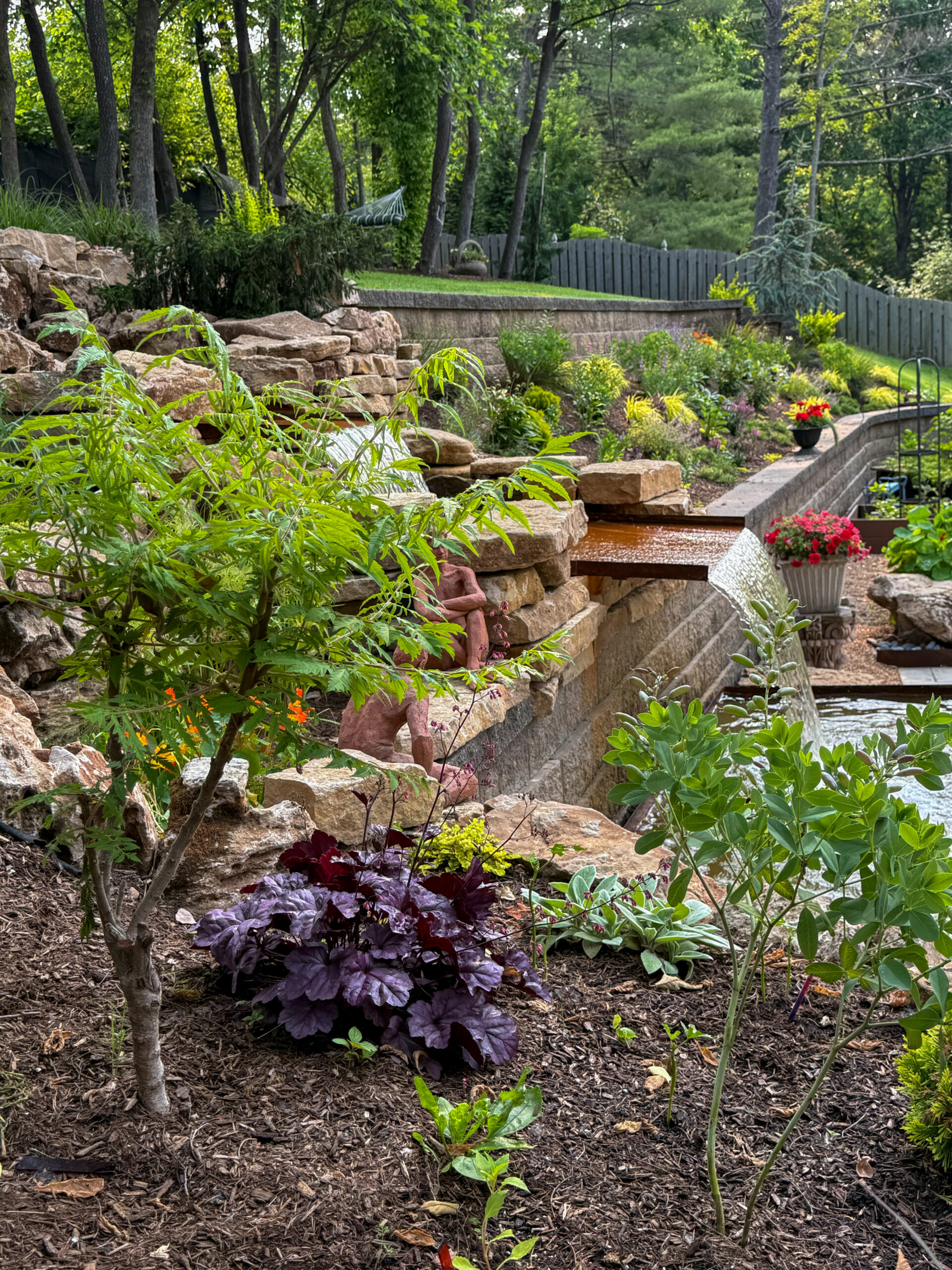
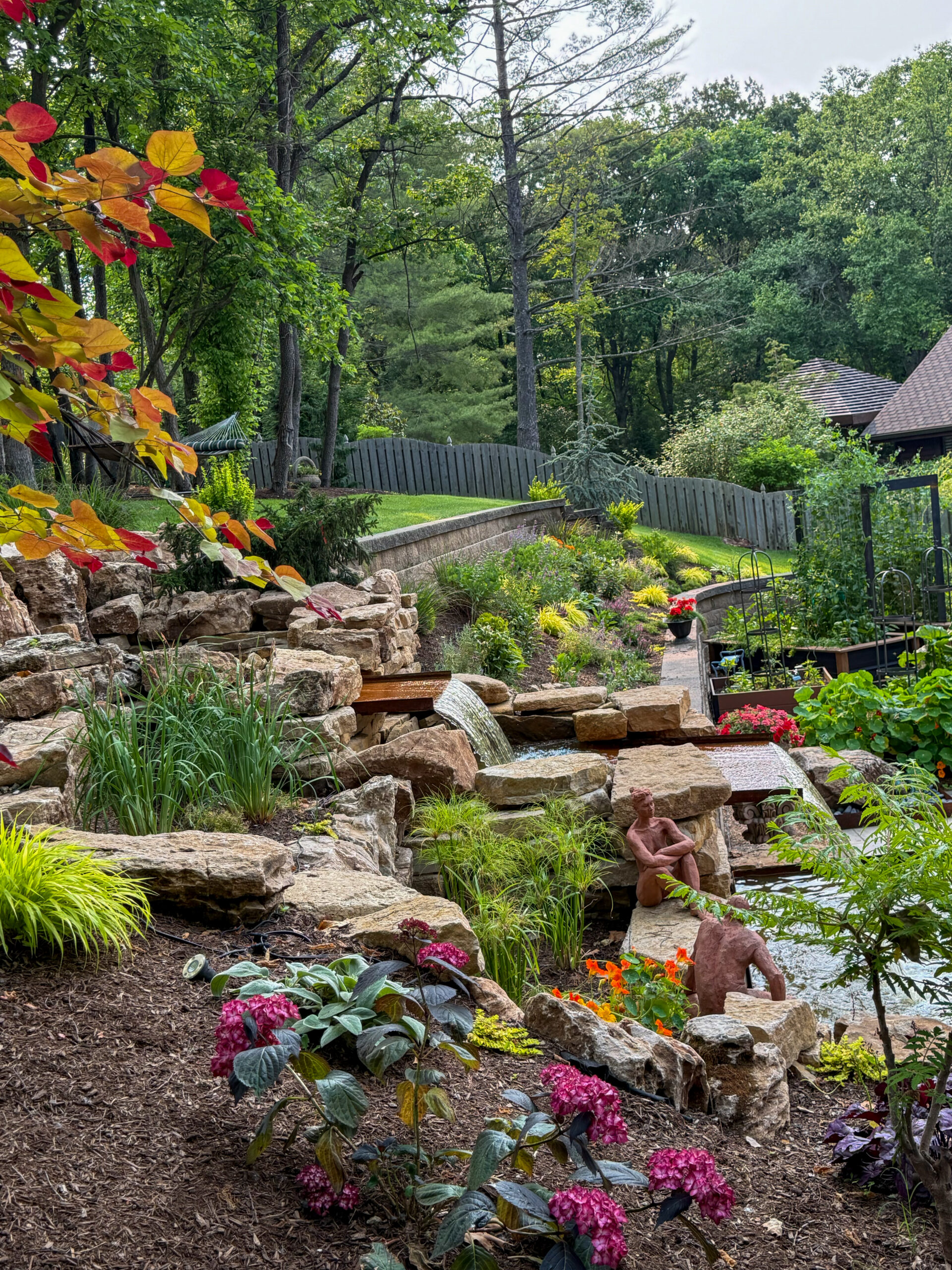
The test of a water feature is whether it looks like it was there before the house. That comes from the stone: local boulders set deep enough to look buried rather than delivered, weathered faces turned out, and the same stone carried into the planting beds so the feature has somewhere to end. We set the large pieces with a machine and then move them by hand until they sit right.
Plantings do the rest. Sedge, iris and fern along the margin blur the line between the water and the garden, and ground cover over the reservoir hides the edge within a season. The pump, the liner and the valves go where we can reach them without taking the feature apart, which matters more than it sounds. And a pair of lights under the falling water is what makes a feature worth looking at after dinner, so we plan the outdoor lighting at the same time.
Our design-build process
Four steps, and you know the number and the schedule before anything is dug. Most water feature installation projects in St. Louis run one to two weeks on site. Because we are already moving grade and stone, this is the right moment to fix any drainage problem in the same corner of the yard.
Consultation
We walk the yard and start from where you sit and which windows you open. Then we look at grade, power, and what we would be hiding or revealing.
Design and stone selection
Drawn in 3D with the drop height and the spill width decided, the boulders chosen, and a real number attached to the scope.
Excavation and build
Reservoir, liner, plumbing and pump, then the stone set from the bottom up. Our own crews, one coordinator, power run as part of the job.
Filling and tuning
We fill it, run it, and adjust the spill stones by ear until it sounds right. Then we plant the margins and show you how to run it.
What people ask before they start
Less than people expect for a pondless feature: pull leaves off the grate, top up the water in August, and clean the pump once or twice a year. A koi pond is a real commitment by comparison, with filters, water chemistry and seasonal work. Our care programs cover either one if you would rather not think about it.
Less than most people guess. A residential pump on a timer is comparable to running a second refrigerator, and the water loss is evaporation rather than consumption. We size the pump to the feature rather than oversizing it, which is where the running cost usually goes wrong.
This is the most common reason people choose pondless. There is no standing water at the surface, only wet stone over a gravel reservoir, so there is nothing to fall into. It is the answer we give most young families, and you can add an open pond later if you want one.
Yes, and a waterfall building ice is worth seeing. It needs watching in a hard freeze, since ice can divert water out of the channel, so some clients run it all winter and others shut it down in December. We show you both and you decide each year.
No. Mosquitoes breed in water that sits still. A feature with a pump running is moving water, which is why a proper waterfall is better for your yard than the birdbath and the clogged gutter you already have.
Often, yes. Leaks, a failed pump, a feature that never sounded right, or stone that has shifted out of line. We will look and tell you honestly whether it is worth repairing or whether you would be better off rebuilding the top of it.
Built at the same time, for less
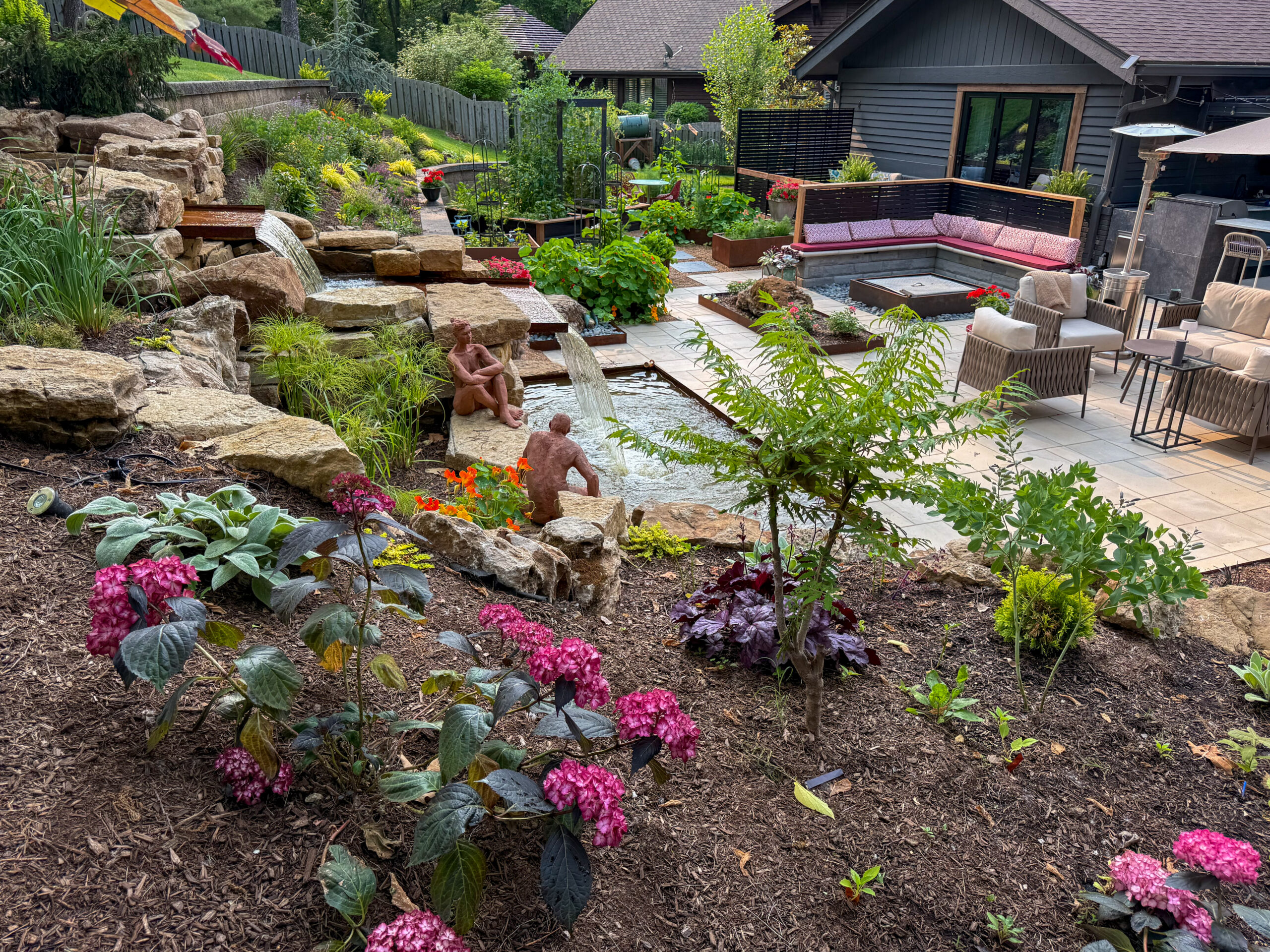
Patios
Somewhere to sit within earshot, which is the whole point.
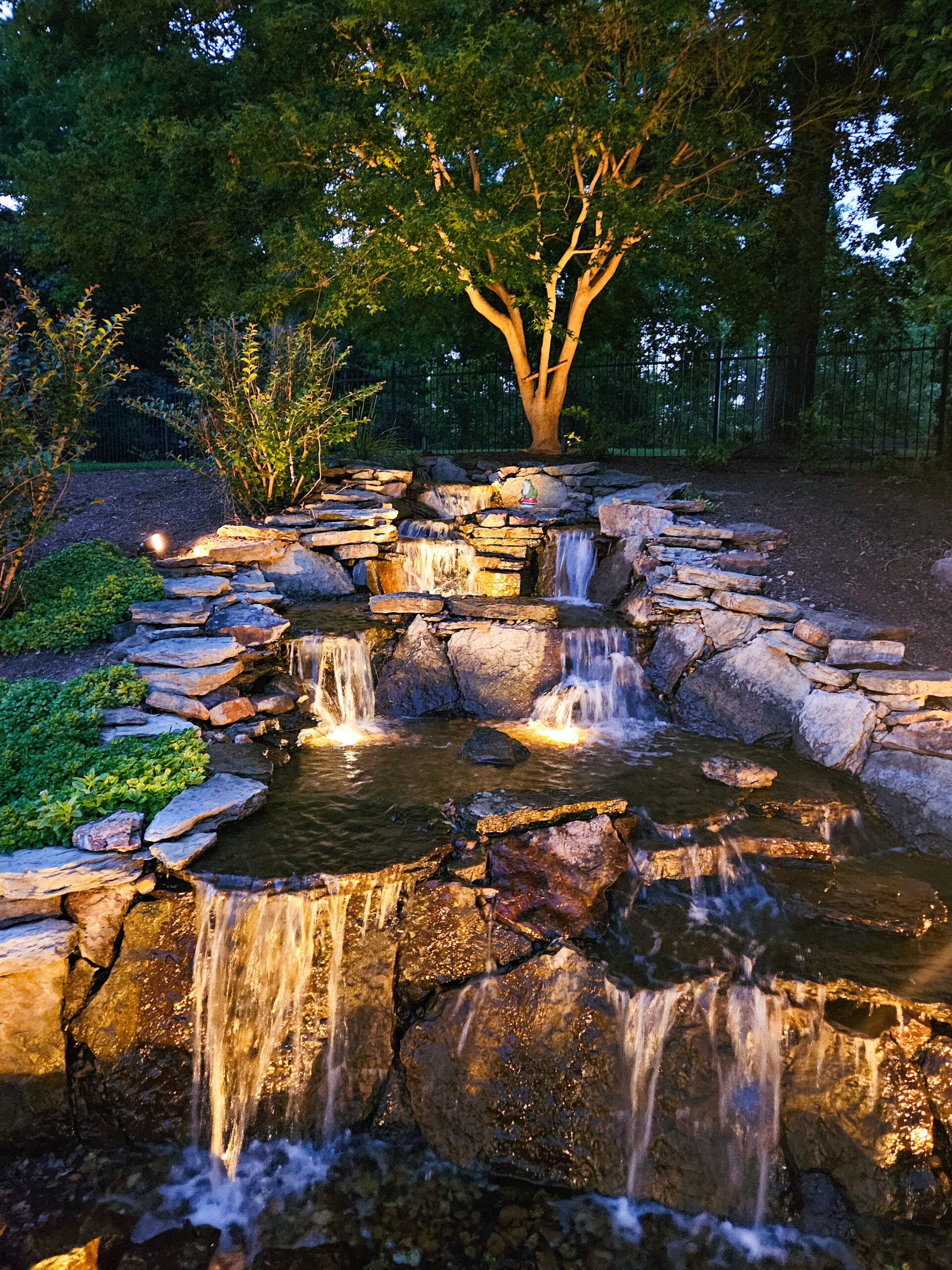
Outdoor Lighting
A light under falling water is the best thing lighting does.
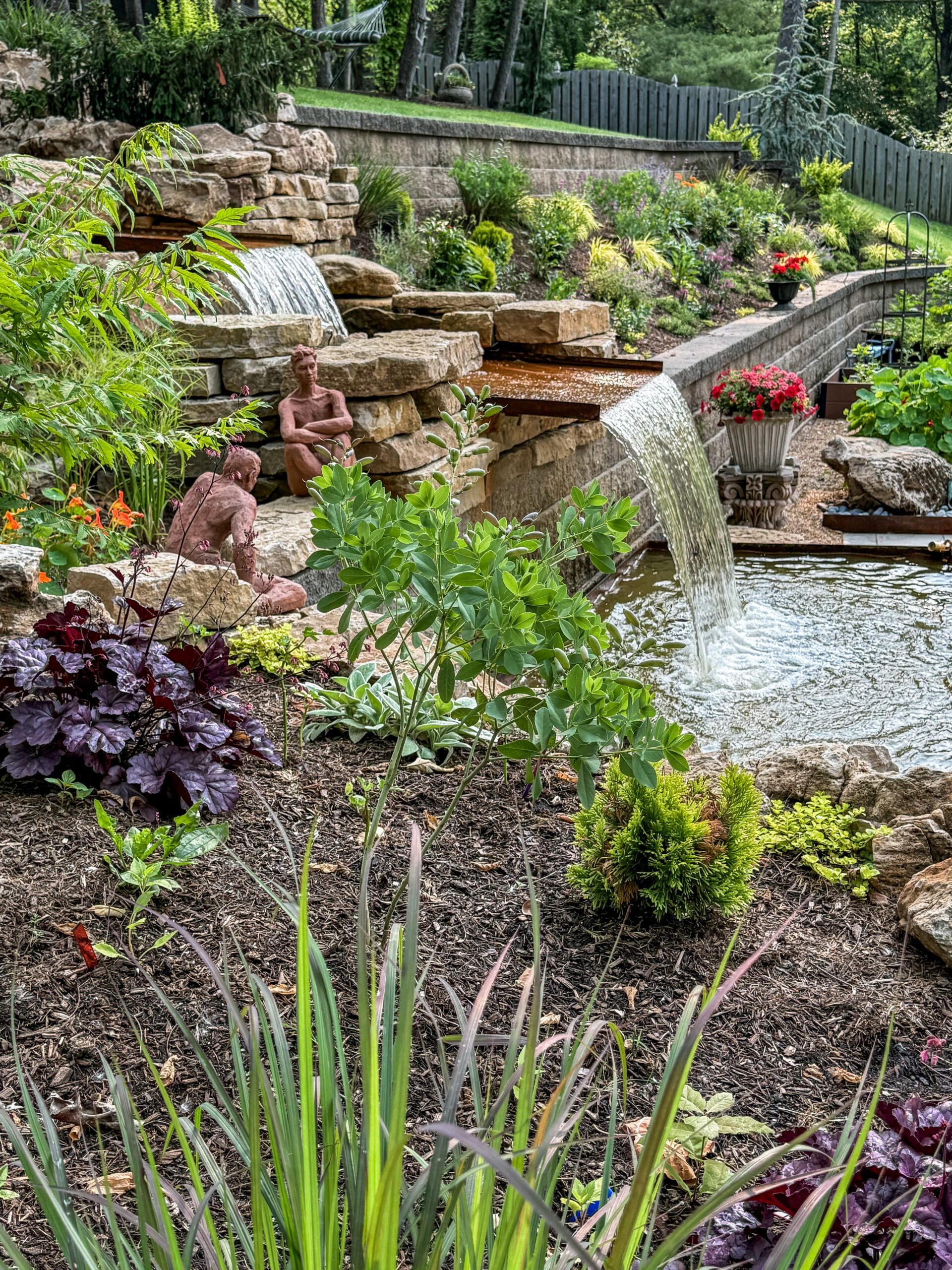
Plantings
The margin planting is what stops a new feature looking new.
Already have a feature and just want it taken care of?
See the maintenance plans