
Some families come to us with a list of features. This one came to us with a feeling.
They wanted to feel relaxed. Not just when guests came over or on a quiet Sunday, but every time the kids ran out to play in the backyard and every time they pulled out of the driveway for the day. Their home should feel like a place that slows you down.
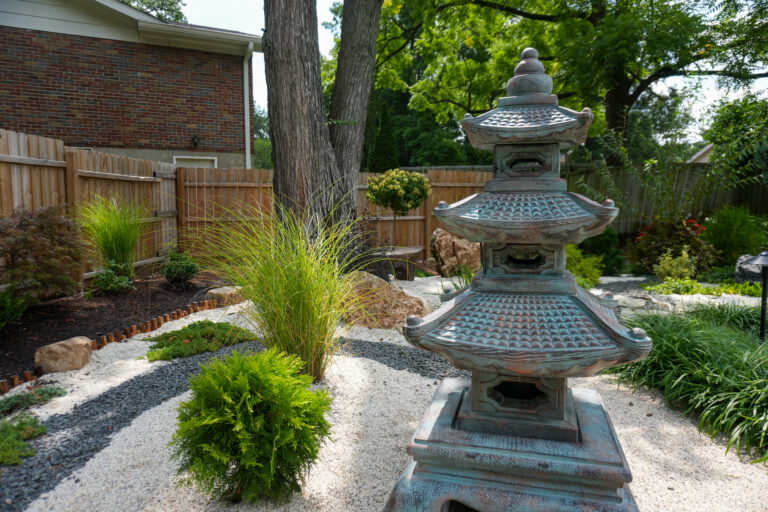
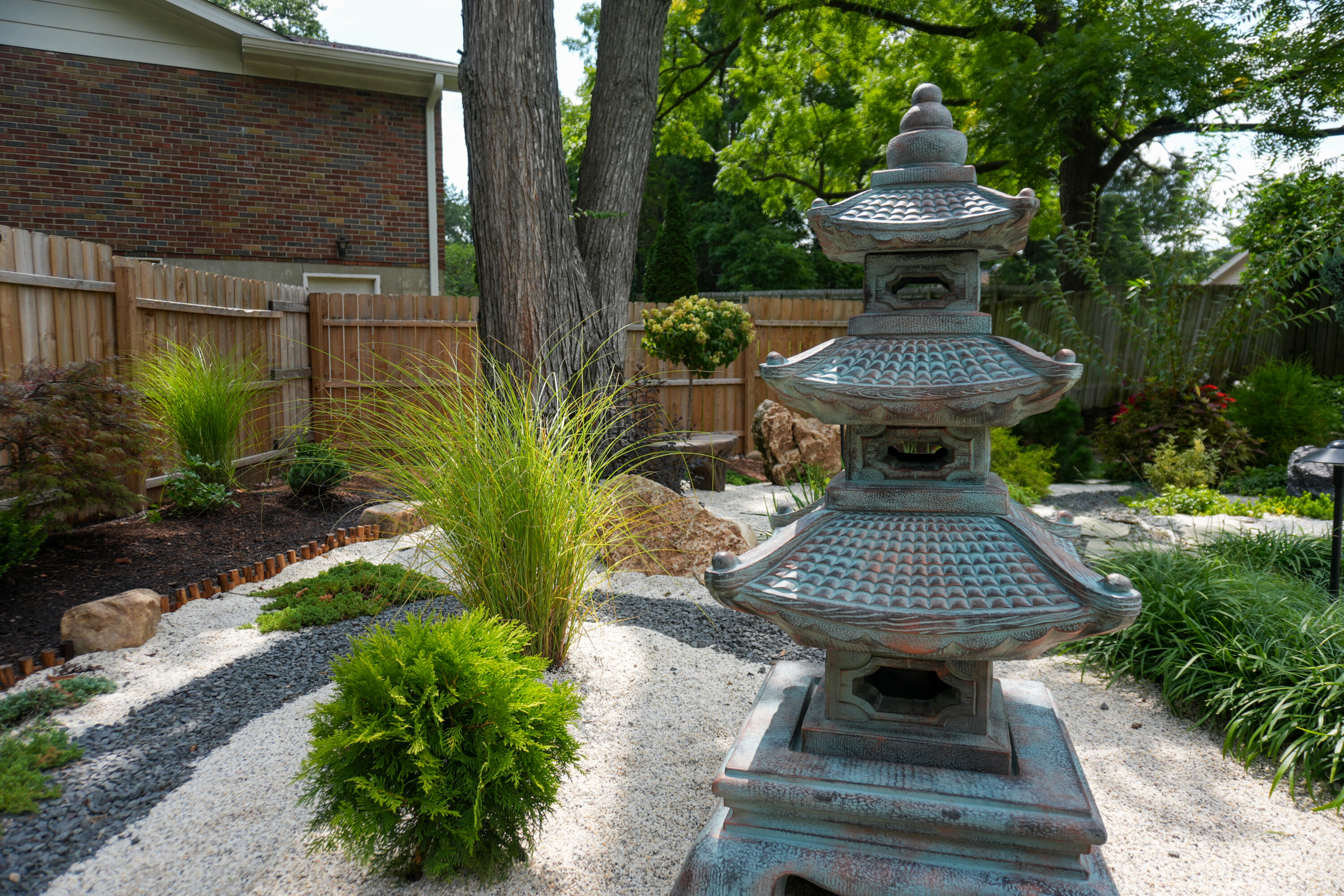
Ian, our Garden & Estate Manager, worked with them to design a Japanese garden landscape that does exactly that. Here’s a look at how it came together, from the front of the home all the way to the back.

Why This Family Chose a Japanese Garden
(Before photo shown above)
Japanese gardens are built around calm. Every stone, path, and plant is placed with intention, and the design is meant to draw you in slowly instead of showing you everything at once.
For a busy family, that was the appeal. They didn’t want a yard that felt like another project. They wanted one that felt like a deep breath, with room for the kids to play and space for the adults to unwind.
Walking the Garden, Front to Back
The Front Yard: Setting the Tone
The front of the home is where the calm starts. Instead of a typical lawn-and-shrub layout, the entrance now uses natural stone, soft ornamental grasses, and a Japanese maple to create a sense of arrival. It’s the first thing the family sees when they come home and the last thing they see when they leave.
Japanese gardens are built around calm. Every stone, path, and plant is placed with intention, and the design is meant to draw you in slowly instead of showing you everything at once.
For a busy family, that was the appeal. They didn’t want a yard that felt like another project. They wanted one that felt like a deep breath, with room for the kids to play and space for the adults to unwind.
The Backyard: A Place for the Family
The backyard is where the design really does its job. Seating areas give the family places to gather, while open space leaves room for play. The layout balances calm and function, so the garden works for everyday life, not just for looking at.
The Plants: Japanese Maples, Grasses, and Seasonal Color
Plant choice is what makes a Japanese garden feel alive through every season. This design leans on:
- Japanese maples for graceful structure and standout fall color
- Ornamental grasses for soft movement and texture
- Flowering plants for seasonal bursts of color that complement the calm greens and stone
The result is a garden that changes throughout the year without ever losing its sense of peace.
Designing a Japanese Garden for St. Louis Weather
A Japanese garden in St. Louis has to work with our hot summers, cold snaps, and heavy clay soil. Japanese maples, for example, do best with some protection from harsh afternoon sun. Good drainage matters for both plants and stonework. Thoughtful plant placement and soil preparation are what keep a garden like this looking beautiful for years, not just the first season.
If you’ve visited Seiwa-en at the Missouri Botanical Garden, you already know how well this style can thrive here. A residential Japanese garden brings a piece of that feeling home.
Why Fall Is a Good Time to Start
As the seasons change, it’s a natural time to reflect on how your outdoor space is working for you. Fall is also a great time to plan. Cooler temperatures are easier on new plantings, and starting the design conversation now means your space can be ready to enjoy when spring arrives.


Frequently Asked Questions
Do Japanese maples grow well in St. Louis?
Yes. Japanese maples do well in the St. Louis area, especially when planted with some afternoon shade and protection from strong summer heat.
What’s the difference between a Japanese garden and a zen garden?
A zen garden is a style within Japanese garden design, usually a dry landscape of raked gravel and stone. A Japanese garden is broader and can include water, bridges, plants, lanterns, and paths.
Are Japanese gardens low maintenance?
They can be lower maintenance than a traditional lawn, but they still need care like pruning, leaf cleanup, and water feature upkeep to keep their clean, intentional look.
Can I have a Japanese garden in a smaller yard?
Absolutely. Japanese garden principles like layering, natural materials, and intentional paths work beautifully in small spaces.
How long does it take to design and install a Japanese garden?
It depends on the size and features of the space. Your designer can give you a timeline once they understand your goals.