
The first cool mornings of fall are a relief after a St. Louis summer. Your lawn feels the same way. After months of heat, humidity, and uneven rain, most lawns in Kirkwood, Chesterfield, Town and Country, and the surrounding areas are a little thin, a little patchy, and ready for some attention.
Here’s the good news: fall is when that attention pays off most. What you do for your lawn in the next few weeks shapes how it looks next spring and summer. Below, we’ve answered the questions St. Louis homeowners ask us most this time of year.
Why is fall the best time for lawn care in St. Louis?
Most St. Louis lawns are tall fescue, a cool season grass that does its best growing when temperatures drop. In early fall, the soil is still warm, which helps grass seed sprout faster, while the cooler air suits the way cool season grasses grow. Weeds slow down, rain tends to be more regular, and new grass doesn’t have to fight through summer heat to get established. missouribotanicalgarden
In other words, fall gives your lawn a head start that spring simply can’t match.
When is the best time to overseed in St. Louis?
According to the Missouri Botanical Garden, the best window for seeding a cool season lawn in the St. Louis area runs from late August to mid-October.
Is it too late to plant grass seed in St. Louis?
If you’re reading this in late September or early October, you still have time, but the window is closing. Seed that goes down now needs a few weeks of mild weather to root in before the first hard freeze. After mid-October, it’s usually too late.
Should I aerate my lawn in the fall?
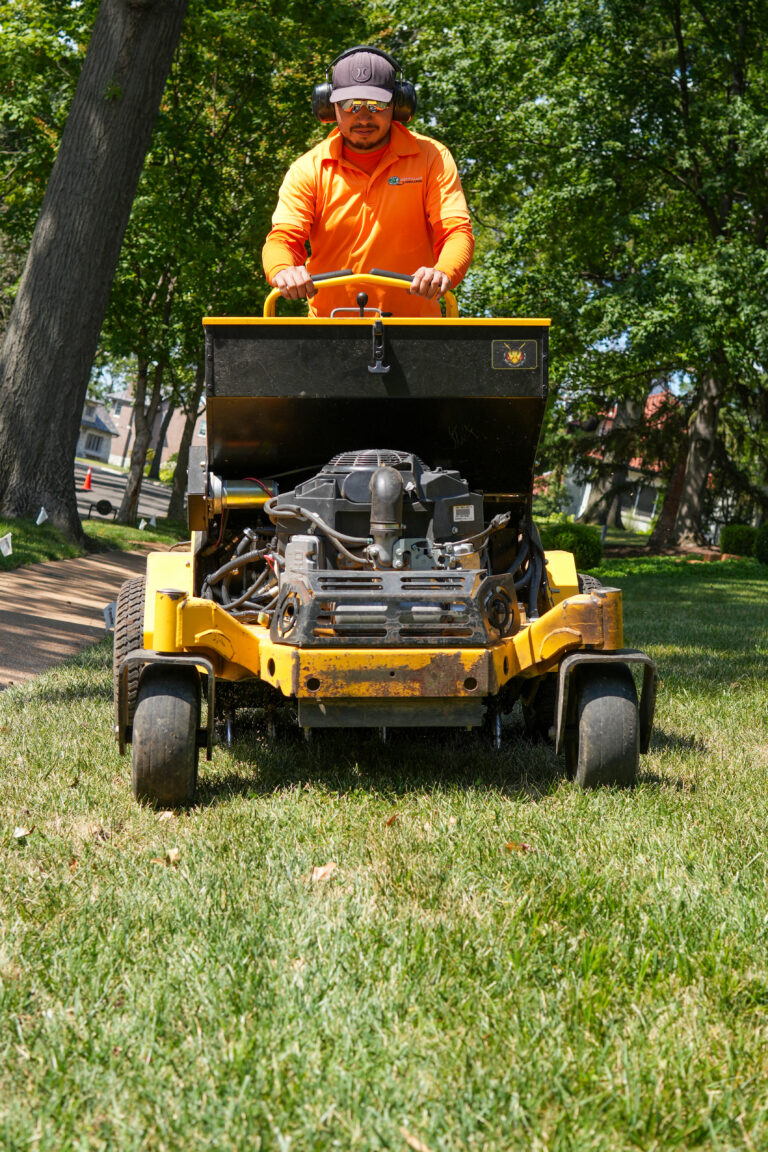
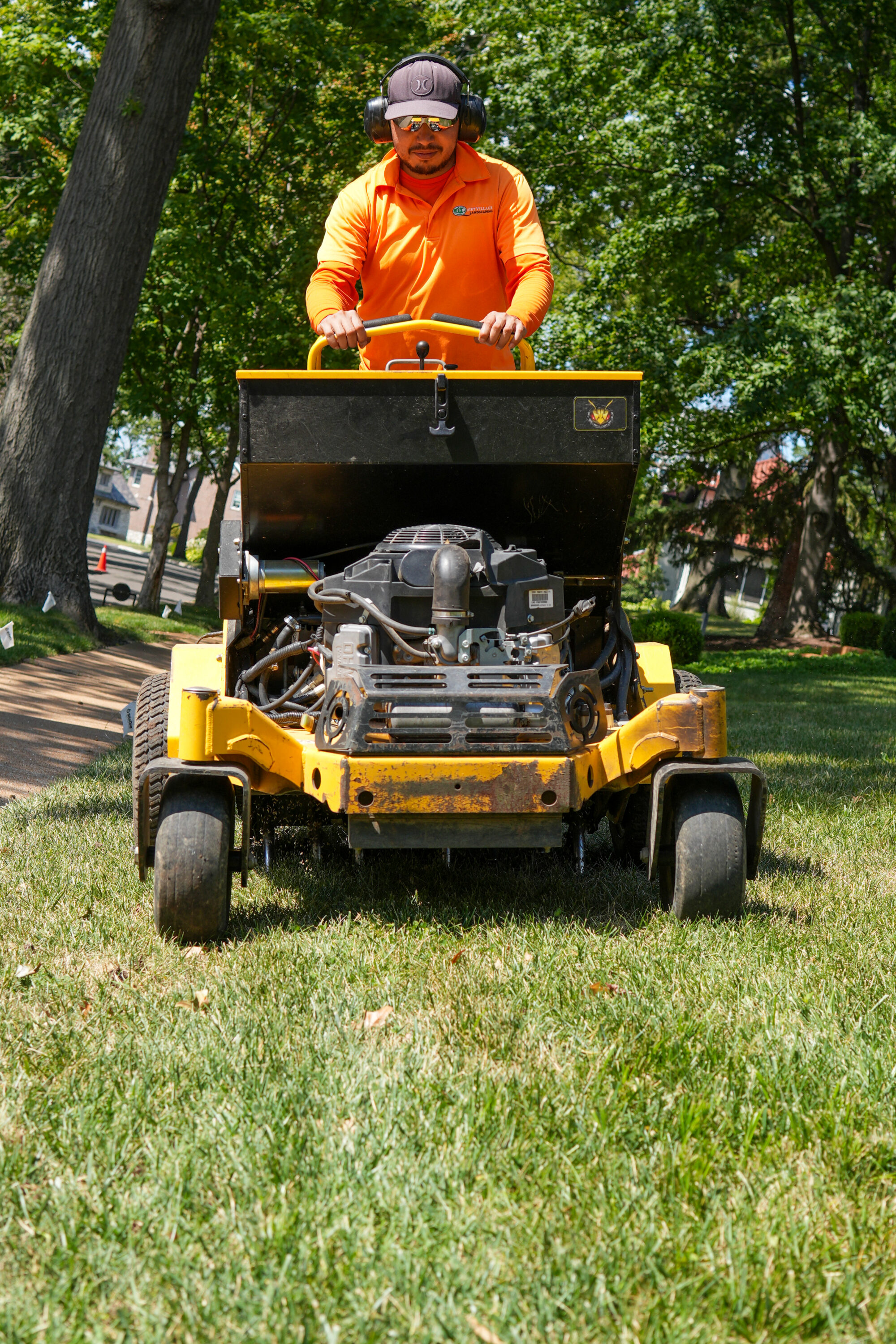
Yes, especially if your yard has clay soil, heavy foot traffic, or kids and dogs running laps. Core aeration pulls small plugs of soil out of the lawn so water, air, and nutrients can reach the roots. It also creates the perfect little pockets for grass seed to settle into.
That’s why aeration and overseeding go together. Aerate first, seed right after, and the new grass has a much better chance of taking hold.
When should I fertilize my lawn in St. Louis?
For tall fescue and bluegrass, fall is the most important feeding of the year. University of Missouri Extension calls September the most important time to fertilize cool season lawns, because the grass uses those nutrients to build deeper roots before winter. missouri
If you’re not sure what your soil needs, a soil test is worth doing. MU Extension notes that a soil pH of roughly 6.5 to 6.8 is ideal for lawns.
What about zoysia and bermuda lawns?
Not every St. Louis lawn is fescue, and warm season grasses need very different fall care. Here’s the short version by grass type.
Tall fescue (and bluegrass): This is the lawn fall was made for. Aerate, overseed thin spots, fertilize, and keep mowing at a taller height until the grass stops growing.
Zoysia: Zoysia is starting to slow down and go dormant, so this is not the time to seed it or push it with nitrogen. A University of Missouri turf pathologist explains that zoysia should be fed in the summer months, and that fertilizing at the wrong time encourages soft growth that makes the lawn more prone to disease. Large patch, a common fungal disease in St. Louis zoysia lawns, is a good reason to hold off on fall feeding. Instead, keep mowing as needed, clear leaves so they don’t smother the grass, and let the lawn go dormant naturally. The tan color over winter is normal. missourimissouri
Bermuda: Bermuda follows the same rules as zoysia. Skip fall seeding and heavy fertilizing, and let it go dormant. Fall is a good time to edge it back from your planting beds, since bermuda likes to creep where it isn’t wanted.
How should I water new grass seed?
New seed needs light, frequent watering, not deep soaks. MU Extension’s advice is simple: after seeding, keep the soil dark but not so wet that it looks shiny. That usually means short watering sessions a couple of times a day until the seedlings are established. missouri
Once the weather turns cold, your irrigation system needs attention too. Adjust your watering schedule as temperatures drop, and have the system winterized before the first hard freeze so pipes and heads don’t crack.
Your fall lawn care checklist
- Aerate compacted or high traffic areas
- Overseed thin spots in fescue lawns before mid-October
- Fertilize cool season lawns in early fall
- Skip seeding and nitrogen on zoysia and bermuda
- Water new seed lightly and often
- Keep leaves from matting on the lawn
- Adjust and winterize your irrigation system
- Keep mowing until the grass stops growing
Frequently asked questions
What month should I overseed my lawn in St. Louis?
September is ideal, with the window extending to about mid-October for cool season grasses like tall fescue.
Can I overseed zoysia in the fall?
No. Zoysia is a warm season grass that goes dormant in fall, so seed won’t establish well. Late spring and early summer are the right time.
Should I aerate before or after overseeding?
Aerate first. The holes give seed a protected place to settle and sprout.
How long does new grass seed take to grow in the fall?
Tall fescue typically sprouts in about one to two weeks in fall conditions, though it takes several more weeks to fill in and root deeply.
Do I need to fertilize in the fall if I fertilized in the spring?
For fescue lawns, yes. Fall feeding matters more than spring feeding because it strengthens roots heading into winter.
When should I stop mowing in St. Louis?
Keep mowing at your regular height until the grass stops growing, usually in November.
Ready to give your lawn a strong finish to the year?
Fall lawn restoration is one of the best things you can do for your yard, and it’s something our team handles every season for homeowners across Kirkwood, Frontenac, Town and Country, Manchester, Des Peres, Clarkson Valley, Chesterfield, Wildwood, and Sunset Hills. Our restoration service covers aeration, seeding, fertilizing, and topdressing, then adjusts your watering system so everything takes hold.
If you’d like a hand this fall, you can book a consultation below and we’ll take a look at what your lawn needs.