

A lawn that looks after itself, because we do
Thin patches by the driveway. Yellow streaks by July. Ground so hard the rain runs off it. Most St. Louis lawns sit on heavy clay that packs down a little more every year, and fertilizer alone can't fix that. So our program does both: it feeds the grass on a schedule built around our seasons, and in the fall it opens the soil back up with lawn aeration, overseeding and top dressing. The goal is simple. Help the lawn breathe, and it grows in thicker.
Lawn fertilization and weed control benefits
Deeper roots
Roots that reach down hold up better in an August dry spell and shrug off insects and disease.
Even color and density
The right nutrients at the right time, so the lawn fills in edge to edge instead of greening up in patches.
Weeds stopped early
Crabgrass, broadleaf weeds and nutsedge handled before they spread, not after they've taken a corner.
Nothing to keep track of
Seven visits, timed for you. No reminders to set, no product to buy, no weekend spent with a spreader.
Our 7-step lawn program
Each step goes down in its own window. The numbers on each blend are nitrogen, phosphorus and potassium, by percent. Windows are approximate: a cold spring or a wet fall moves them by a week or two, and we watch the weather so you don't have to.
Pre-emergent Fertilizer
13-0-0 blend · March to mid April
A nitrogen-rich feed with a crabgrass barrier that stops weeds before they come up.
Second Pre-emergent and Weed Spray
14-0-0 coated blend · Mid April to mid May
Renews the crabgrass barrier and treats the broadleaf weeds that are already up, across the whole lawn.
Nitrogen Boost and Grub Control
12-0-0 blend · Mid May through June
Grub control goes down ahead of the summer hatch, with spot treatment for nutsedge and broadleaf weeds.
Summer Feed and Weed Spray
15-3-7 granular blend · July to mid August
Keeps the grass fed through the heat, with a blanket weed spray and spot treatment for nutsedge.
Starter Fertilizer
15-3-7 granular blend · Late August to mid September
Feeds the lawn going into aeration so new seed has what it needs to root. Spot weed and nutsedge spray.
Aeration and Overseeding
Core aeration and seed · Mid September to mid October
Pulls plugs of packed soil and drops new seed into the holes. Top dressing can follow the next day. How it works
Slow-release Winterizer
28-0-3 slow-release blend · November
The last feed of the year. The roots keep storing it after the top growth stops, so the lawn wakes up stronger in spring.

We test the soil before we feed it
Every program starts with a soil sample from your lawn. We send it to the University of Missouri Extension, and their lab sends back a nutrient profile. If your soil is short on something, or already has plenty of it, we adjust what goes down. No guessing, and no paying for nutrients your lawn doesn't need.
Feeding keeps a lawn going. Fall is when it gets rebuilt.
What lawn aeration is, and why it matters
A core aerator pulls thousands of small plugs out of the lawn. Each hole lets water, oxygen and nutrients reach the roots instead of running off the top. Clay soil loosens up, and the roots finally have room to spread.
Then we overseed. The seed falls into the holes, where it sits in contact with soil, stays moist and germinates faster than seed scattered on the surface. New grass fills the thin spots, and a thicker lawn leaves less room for weeds. It's the reason aeration and overseeding sit inside our lawn fertilization program rather than apart from it.

When to aerate in St. Louis
Fall, almost every time. Lawn aeration in St. Louis works best from mid September into October, while the soil is still warm and the nights have cooled off.
Why fall works
Cooler days and natural fall rain help new seed root before winter. Weeds are slowing down, so the new grass doesn't have to compete for space.
Why spring is harder
Seed comes up into summer heat, and crabgrass is coming up beside it. If you have a sprinkler system, the heads can't be located until it's turned on in May. We mark them during irrigation maintenance so the aerator stays clear.

What top dressing is, and why it works
Top dressing is a thin layer of compost-rich soil spread over the lawn right after aeration. It falls into the open holes and works its way down to the roots. We use one blend, made locally by St. Louis Compost.
- Feeds root growth with organic matter clay soil is missing
- Levels low spots and shallow depressions over time
- Helps water soak in instead of pooling, alongside proper drainage solutions
- Crowds out weeds like nutsedge as the turf thickens
We spread it the day after aeration, and never more than two days later, while the holes are still open.
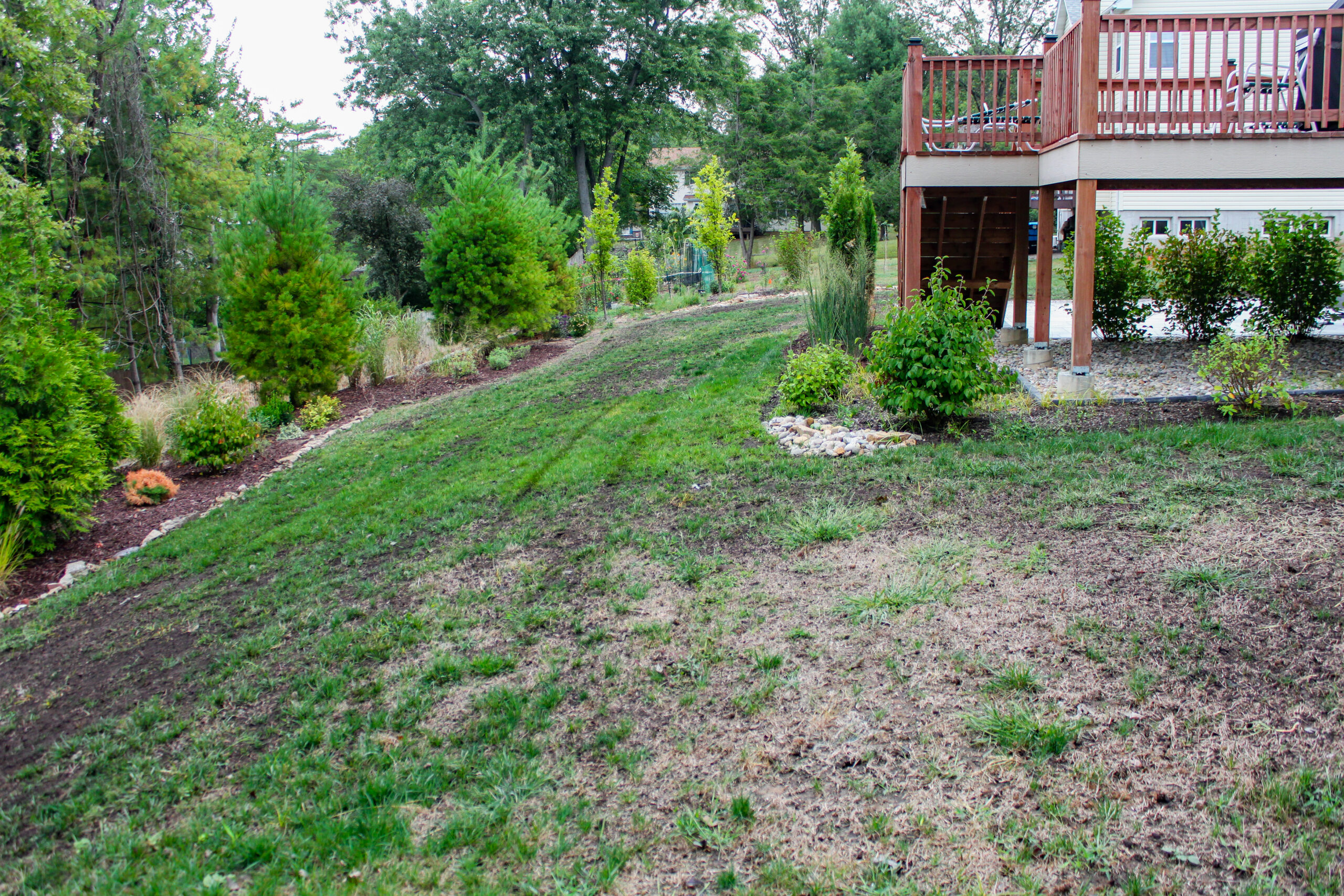
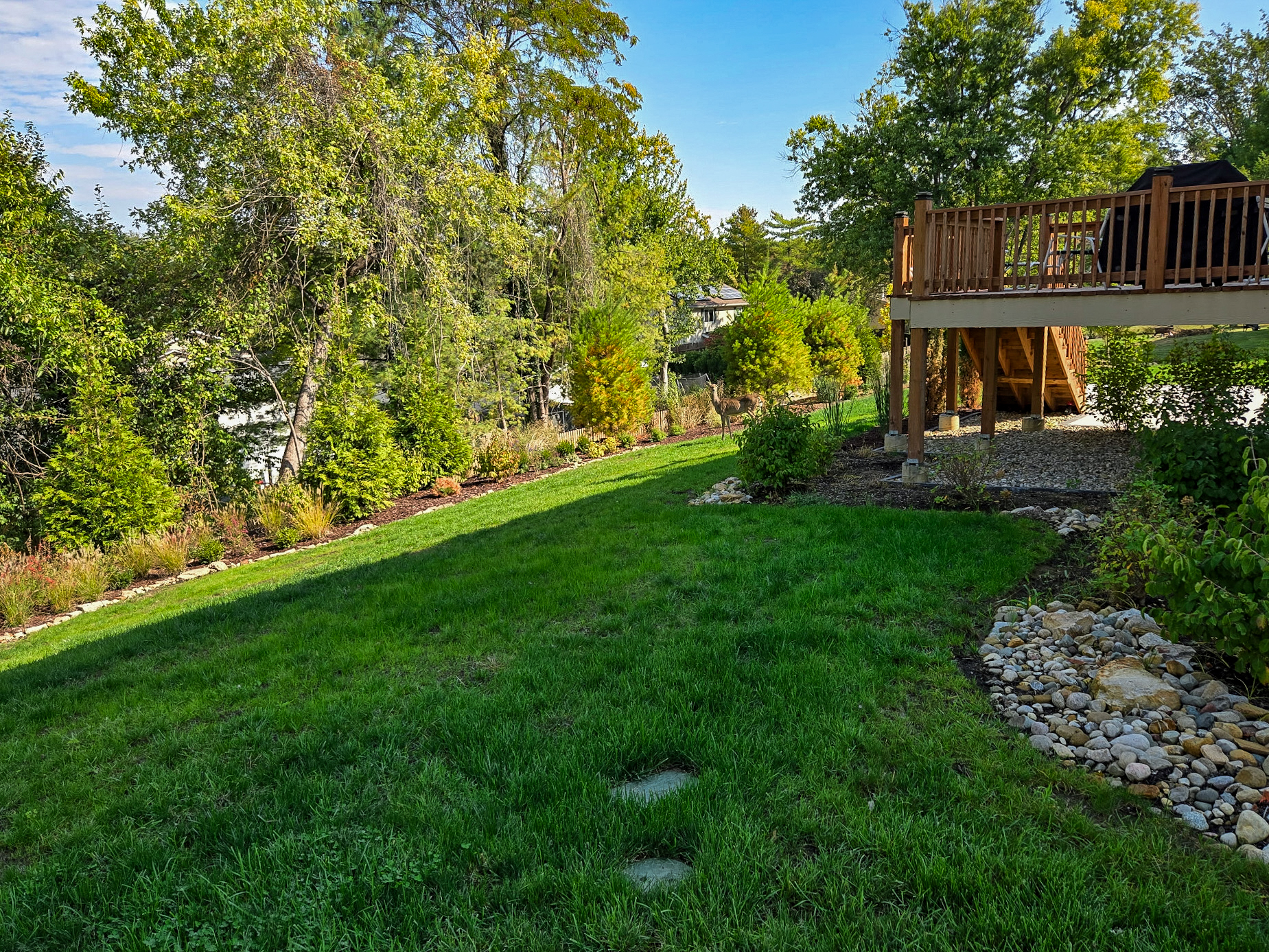
The same lawn, before and after
Watering and care after service
New seed needs steady moisture for its first few weeks. That's the one thing we can't do from the truck. If you'd rather not think about it, our Lush Lawn Care Program handles watering setup along with everything else.
Water lightly, often
Keep the top of the soil damp, not soaked, until the new grass is up. Fall rain usually helps.
Leave the plugs
They break down on their own within a couple of weeks and put their soil back into the lawn.
Expect it by spring
You'll see new grass in a few weeks. The real difference shows next spring, when the lawn comes back thicker.
What people ask before they sign up
Do I need to be home for visits? +
No. As long as we can reach the lawn and the gate is unlocked, the crew takes care of it. We'll let you know when a visit is done.
When can the kids and the dog use the lawn again? +
It depends on the step. We'll tell you after each visit how long to stay off, and it's usually a short wait. If you have a party or a game planned, tell us and we'll work the visit around it.
Can I add aeration without the full program? +
Yes. Aeration, overseeding and top dressing can be booked on their own each fall. They do the most good when the lawn is fed through the rest of the year, which is why they sit at step 6 of the program.
What if it rains right after a visit? +
A normal rain helps. It waters the granular feed into the soil. We watch the forecast and move a visit if a heavy storm is coming, so nothing washes off the lawn.
Can I start partway through the year? +
Yes. We pick up at whichever step fits the season. Fall is a good time to start, because aeration and the winterizer set the lawn up for its first full year with us.
Clayton · Ladue · University City · Webster Groves · Kirkwood · Town and Country
And the surrounding St. Louis area. If you're not sure we come out your way, call and ask.
Want mowing and the rest of the lawn on the same schedule?
See Village Lawn Co.
Give your lawn room to breathe
One fall of aeration, seed and top dressing, then a year of steady feeding, and the lawn you see next spring is a different lawn. Hosting something this fall? Book ahead and we'll time the visit so the yard is ready.