
On September 1, the sun set over St. Louis at 7:32 p.m. By September 30, it sets at 6:46. When clocks fall back on November 1, you lose another hour of evening light overnight, and by December 6 the sun is down at 4:40 p.m. (sunrise and sunset data)
The timing feels a little unfair. October is one of the best months to be outside here. National Weather Service normals put average October highs near 69 degrees and lows near 49. That’s patio weather, fire pit weather, and dinner outside weather. The problem isn’t the temperature. It’s that the yard goes dark right when you’d want to use it.
Good outdoor lighting fixes that. Here are the ideas we come back to most when helping St. Louis homeowners get more out of their evenings this time of year.
Start With How You Actually Use Your Yard
The best lighting plans don’t start with fixtures. They start with a simple question: where do you want to be at 7:30 on a Tuesday in October?
For most families, the answer is a handful of places. The patio table. The grill. The fire pit. The path between the back door and all three. Light those well, and the rest of the yard can stay soft and quiet.
The patio or deck where you sit
Keep it low and warm. Light tucked into seat walls, steps, or the edges of a patio gives you enough glow to see faces and plates without feeling like you’re sitting under a porch light. The goal is a space that feels like an extension of your living room.
The outdoor kitchen or grill
This is one place where brighter, focused light earns its spot. You want to see what’s on the grill and what’s on the cutting board. From there, the light can step down around the dining area so the table stays relaxed.
The fire pit
Let the fire do most of the work. A little light at the edges and along the way in helps people find their seat and get back to the house without taking away from the fire itself. Fall is when a fire pit gets the most use in St. Louis, so it’s worth planning how people reach it after dark.
Paths, steps, and the way back inside
The places people walk are where lighting matters most for safety. Path and step lights mark changes in grade, the edges of pavers, and the route from the driveway to the front door. On St. Louis properties with slopes and retaining walls, this is often the first thing worth lighting. It’s also what makes guests feel comfortable moving around your yard at night.

Let Your Landscape and Home Carry the Evening
Once the spaces you use are lit, the next layer is what you see from them.
Mature trees
Many established St. Louis neighborhoods, from Kirkwood and Webster Groves to Ladue, are full of big, mature trees. A well-lit oak or maple becomes the backdrop for your whole backyard. Uplighting shows off the trunk and canopy. Moonlighting, where fixtures are mounted high in a tree and aimed down, casts soft, dappled shadows across the lawn or patio below.
Your home’s architecture
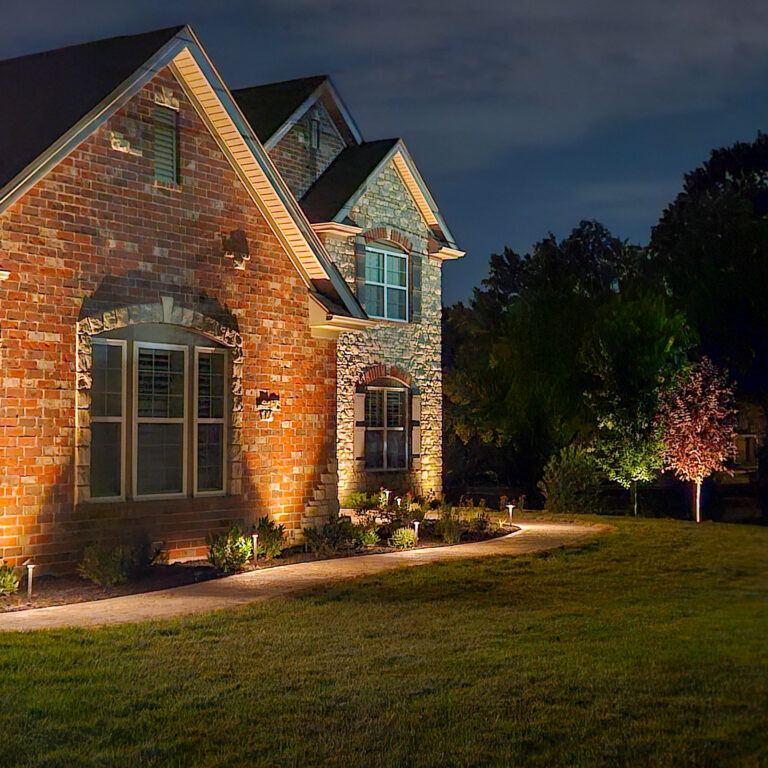
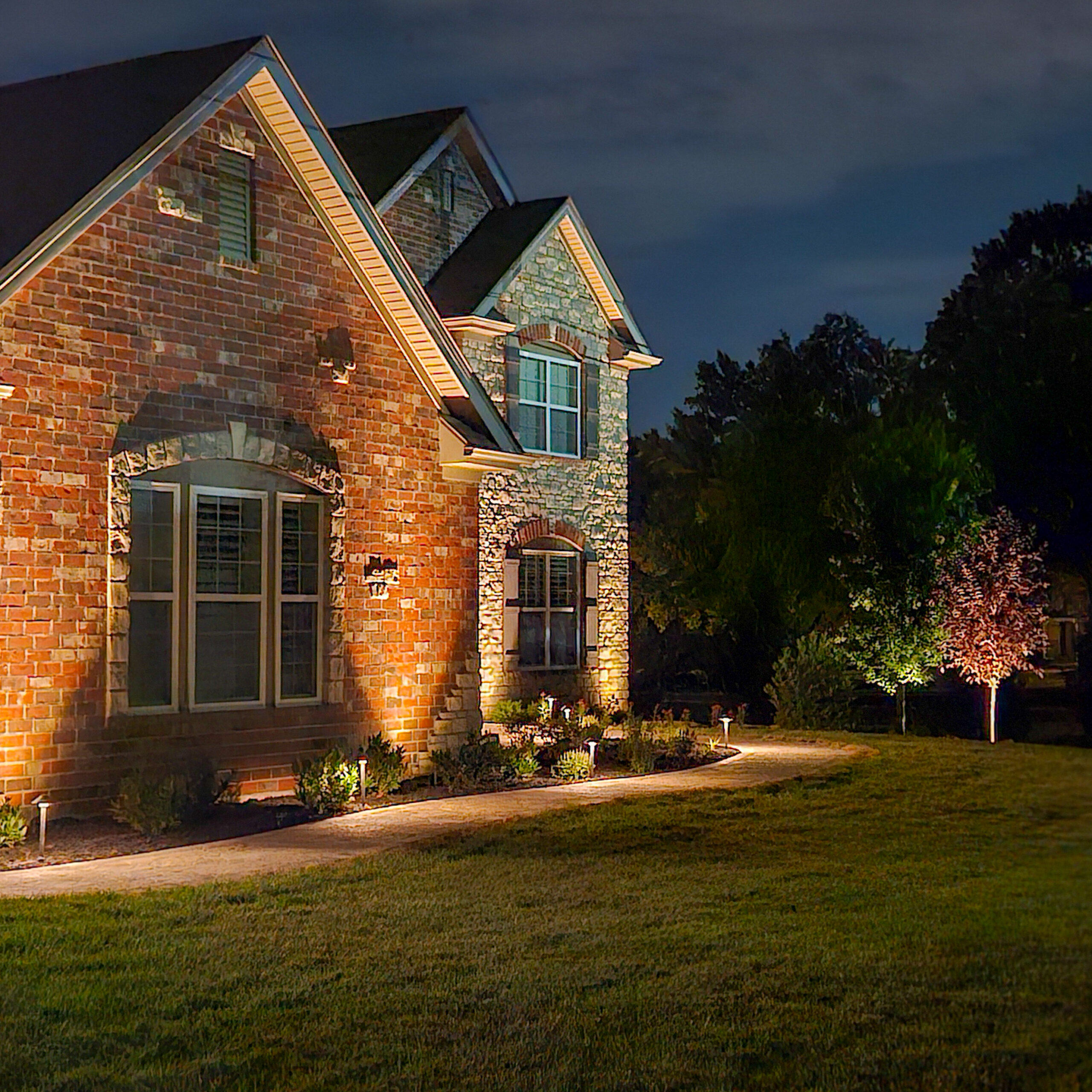
Brick, stone, columns, and textured walls come alive when light is washed or grazed across them. A few carefully placed fixtures can make your home look as good at 8 p.m. as it does at noon, without floodlighting the whole front.
Garden beds and standout plants
A Japanese maple, a sweep of ornamental grasses, or a clean boxwood hedge can become a focal point at night. The Missouri Department of Conservation says fall color usually peaks around mid-October. If you have trees that turn, lighting lets you enjoy that color after work, not just on weekends.
The view from inside
Some of the best outdoor lighting gets enjoyed from the kitchen window or the family room couch. On chilly November nights when you’re staying in, a softly lit garden still makes the house feel bigger and the season feel a little less dark.

What Makes Outdoor Lighting Look High-End
The difference between lighting that feels elegant and lighting that feels harsh usually comes down to a few choices.
Warm light. Warm, slightly golden light flatters brick, stone, plants, and people. DarkSky International recommends 2700K or lower for night-friendly lighting at home, which happens to be the warmth most people find inviting.
Less is more. Pathways need less light than you’d think. DarkSky suggests 300 lumens or less for a path. Several soft layers of light look better than one bright source.
Light the feature, not the fixture. You should notice the tree, the wall, or the path, not the glare of a bulb.
Aim with care. Keep light on your property and off the sky and your neighbors’ windows.
Timers and controls. Lights that come on at dusk and turn off when you head to bed save energy, and you never have to think about them.
A St. Louis note on birds
St. Louis sits on the Mississippi Flyway. The St. Louis Audubon Society notes that about 60% of North American songbirds use the flyway, and a Cornell Lab of Ornithology study ranked St. Louis among the most dangerous cities for birds during fall migration because of light pollution. It’s the reason the Gateway Arch goes dark every September. The principles above (warm light, aimed where it’s needed, on a timer) are what make a lighting design both beautiful and a good neighbor to the night sky.

Outdoor Lighting Needs a Little Care Through the Seasons
Lighting isn’t a set-it-and-forget-it part of your landscape. It lives in a garden that changes all year.
Plants grow. A path light that sat perfectly in April can be buried under hostas or grasses by September. Trees fill out and shade the fixtures meant to light them, then drop their leaves in late fall and look completely different.
Sunset moves. In St. Louis, sunset shifts about 45 minutes earlier over September alone, then jumps an hour when the clocks change on November 1. Timers that worked in July can leave you in the dark by October.
Life happens. Mowers, leaf cleanup, a curious dog, a summer storm. Fixtures get bumped, bulbs go out, and wires get nicked.
That’s why we don’t think of lighting as a one-time project. At Quiet Village, we check on our clients’ lights seasonally, adjust aim and timing as the landscape and daylight change heading into fall, and we’re here when something breaks. Your lights should simply come on and look right.

Common Questions About Outdoor Lighting in St. Louis
Is fall a good time to add outdoor lighting?
Yes. Evenings get shorter quickly in September and October, while the weather is still some of the best of the year. Lighting added now gets used right away, through fall color season and all winter long.
Can lighting be added to an existing landscape?
Yes. Lighting can be planned around the trees, beds, patios, and walls you already have. It can also be designed alongside a new patio or landscape design so everything is planned together from the start.
What color outdoor lighting looks best?
Warm white. It flatters brick, stone, and plants, feels more inviting, and is gentler on wildlife. DarkSky International recommends 2700K or lower for home outdoor lighting.
Will outdoor lighting bother my neighbors?
Not when it’s designed well. Thoughtful aim, shielding, and brightness keep light where you want it and out of everyone else’s yard.
Make the Most of Fall in St. Louis
Some of the best evenings of the year are right in front of us. It would be a shame to spend them inside just because the sun goes down earlier.
If you’d like to keep enjoying your patio, garden, and yard after dark, we’d love to walk your property with you and talk through what’s possible. Take a look at our landscape lighting services or schedule your assessment with the button below.