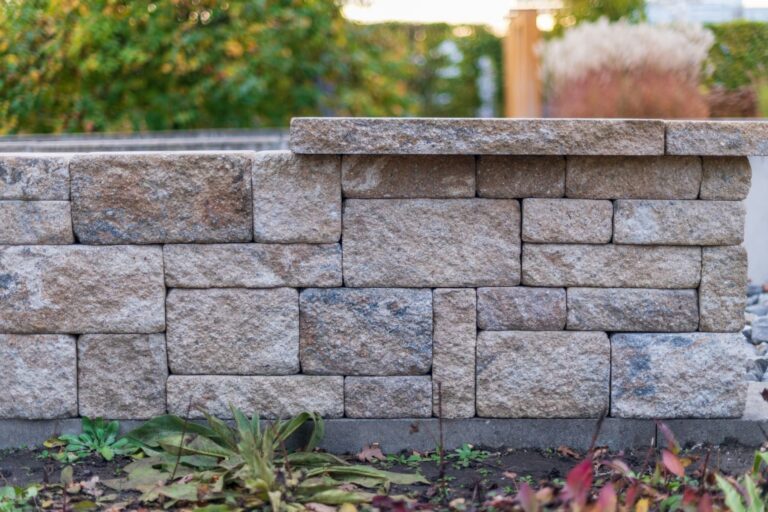


Retaining walls add more than just structure to a landscape. They help hold soil in place, manage elevation changes, reduce erosion, and can even create more usable space in a sloped yard. When a retaining wall begins to fail, waiting until the spring to address this concern can allow a manageable problem to become a much larger issue.
For homeowners in St. Louis, fall is a smart time to inspect your retaining walls, and address signs of damage before the winter arrives. Here are some of the most important warning signs that you need to look out for.
A Leaning Retaining Wall
Your retaining wall should not be leaning like the leaning tower of Piza. It should be stable and relatively straight, so if you notice that your wall is starting to lean, bow, or move outwards, this might be that the soil pressure behind the wall has become too great, or that drainage isn’t working as it should be.
It’s important that you are not just straightening the wall without addressing the underlying concern. Professional assessment is ideal here, as it can determine whether a section can be repaired, or whether a replacement is going to be the best solution in the long term.
Cracks, Gaps, And Bulging
If you’re seeing cracks, this is another reason to have a retaining wall inspected. Small changes may not necessarily mean the entire wall needs replacing, but widening cracks, separated blocks, or any sections that seem to be bulging can show movement or structural stress – both of which need addressing.
You might also see that gaps are starting to develop between wall components, or there may be soil pushing through areas that used to be solid.
Watch For Drainage And Erosion Issues
Water is one of the biggest problems when it comes to retaining walls. Poor drainage can put more pressure on the wall while washing soil away from the foundation.
Make sure that you’re checking for any of the following:
- Standing water
- Soggy areas
- Soil erosion
- Washout
- Water collecting behind or around the wall
Check for these after heavy rainfall to see if there could be an issue. Quiet Village has said that St. Louis properties can experience drainage challenges that create erosion and landscape damage, which means that water management is essential to retaining walls.
Why Repair Before Winter?
St. Louis weather can be a challenge for hardscaping, with heavy rainfall common, followed by winter freeze-thaw cycles. Water can enter cracks, joints and surrounding soil, which can then freeze and expand, potentially putting additional stress on a wall that may already have other issues.
Sorting the issues in the fall gives homeowners a chance to deal with all of these issues before winter weather becomes another stress that you have to contend with.
Don’t Wait
If your retaining wall is leaning, cracking, or showing signs of drainage problems, now in the fall is a good time to have it assessed. Quiet Village Landscaping can help assess your property, discuss possible solutions with you, and carry out this solution. Request an estimate today, and get the issues in hand before winter gets here.