
The first cool morning in St. Louis always shows up out of nowhere. You walk out for the paper or the trash bin, the air has changed, and suddenly the yard that carried you through July looks tired. Summer annuals have gone leggy. The pots by the front door are more stem than flower.
This is the best week of the year to fix that, and it does not take much.
Fall annuals are the fastest, cheapest upgrade in landscaping. A few flats of color, a handful of good pots, and one afternoon of work, and your house feels like the season. Every time you pull into the driveway for the next eight or ten weeks, it looks like someone took care of the place. Because someone did.
Why fall planting works so well in St. Louis
Our summers are brutal on plants. Heat, humidity, and a few weeks of no rain will wear down even a well-designed bed. Then September arrives and the weather turns into exactly what cool season plants want: warm soil, cool nights, and steady moisture.
That combination is why fall color in St. Louis actually outlasts what most people expect. Our first frost typically lands somewhere between mid October and the end of October depending on where you are in the metro, and light frost does not end the show. It makes some of these plants look better.
You get a long, generous window. Most of the fall annuals below will carry you from now through Halloween, and several push into Thanksgiving.

The best fall annuals for St. Louis yards
Mums
The classic, and for good reason. Garden mums give you four to six weeks of heavy color and they are affordable enough to plant in real quantity, which is the trick most people miss. Three mums look like three mums. Fifteen mums look like a design.
Two tips that matter more than anything else. Buy them in tight bud rather than full bloom so you get the whole run instead of the tail end. And water them more than feels reasonable. Mums are shallow rooted and dry out fast in a nursery pot, which is why so many St. Louis porches have a crispy brown mum by the second week of October.
Pansies and violas
If you want the longest season for your money, this is the pick. Pansies and violas laugh off a light frost, keep blooming into winter, and often come back for a second act in early spring. Pansies give you bigger faces, violas give you more blooms at once. Both do best with good sun and well drained soil.
Plant them now and you are buying three seasons of color, not one.
Ornamental kale and cabbage
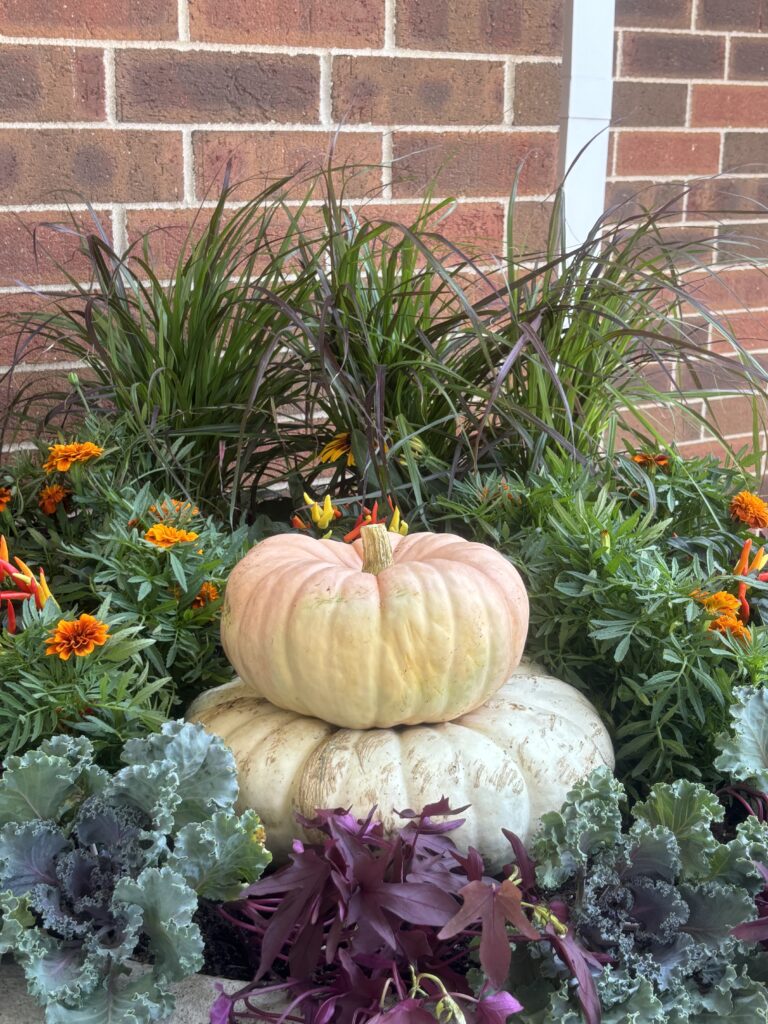
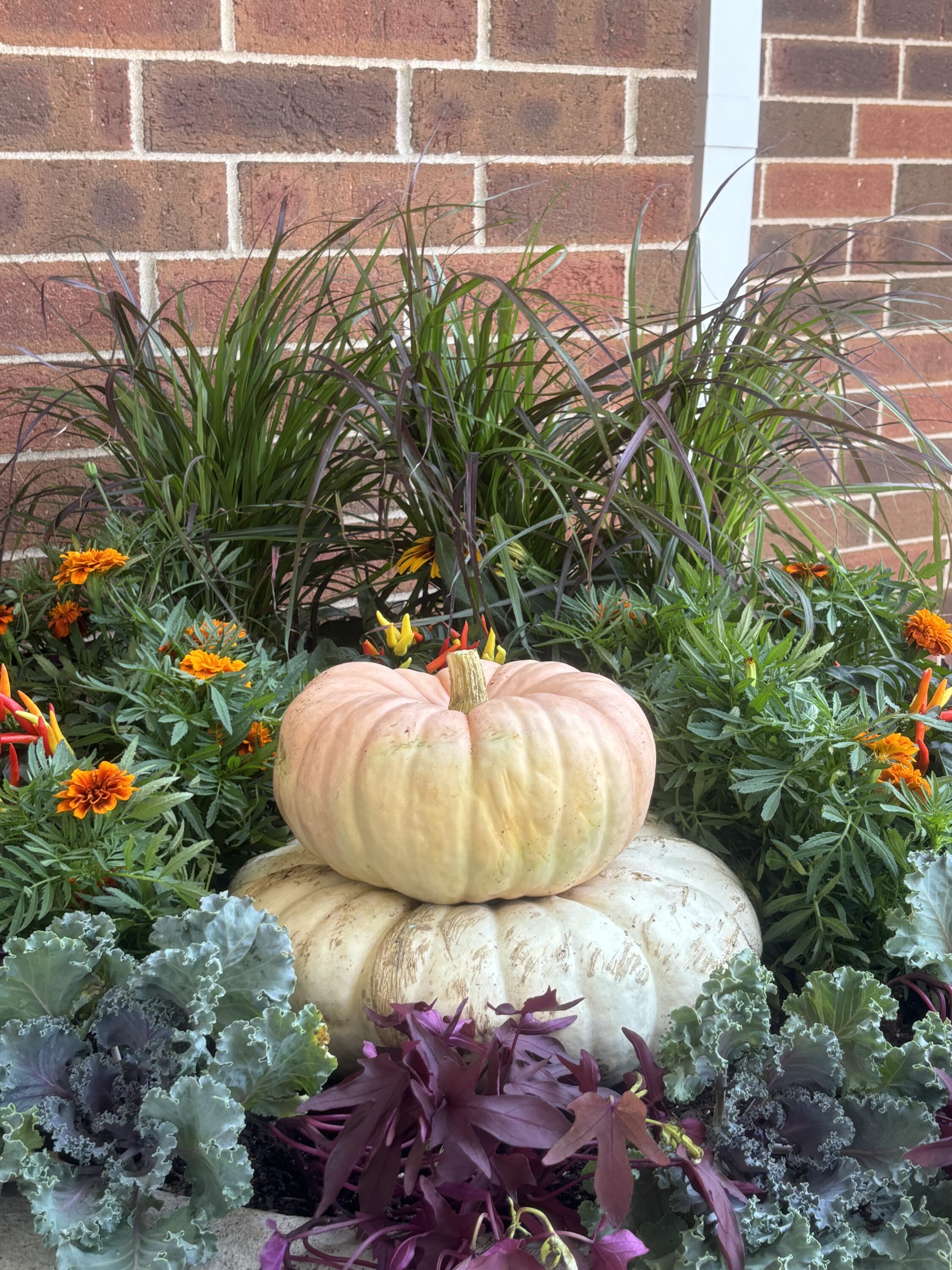
The texture plant. Big ruffled rosettes in purple, cream, and rose that hold up when everything else is fading. The color actually deepens after a cold snap, so they peak right when the rest of the yard is winding down. Great in the middle of a container, great along a front walk.
Asters
Purple and pink, a little softer and more natural looking than mums, and beloved by the last pollinators of the season. Nice if you want fall color that reads like a garden instead of a display.
Ornamental grasses, celosia, and ornamental peppers
The supporting cast that makes a container look designed rather than bought. Grasses give you height and movement. Celosia brings deep reds and oranges. Ornamental peppers add small glossy fruit in purple, orange, and red. Any one of these keeps a pot from looking like everyone else’s pot.

When to plant fall annuals in St. Louis
Right now through early October is the window. For mums specifically, earlier is better if you want them to have any shot at coming back next year, since fall planted mums go into winter with a small root system.
A simple rule for our area:
- Now through early October: mums, asters, kale, cabbage, grasses
- Late September through late October: pansies and violas, which prefer cooler nights anyway
- Any time before a hard freeze: pumpkins, gourds, hay, and hard decor
If you want mums that return as perennials instead of annuals, plant them in the ground next spring and let them root all season. Fall mums are best treated as what they are: gorgeous, temporary, and worth it.
Fall porch and container ideas that do not look like everyone else’s
The formula that never fails is thriller, filler, spiller. One tall plant for height, a mass of color around it, and something trailing over the edge. An ornamental grass, a ring of pansies, and creeping jenny spilling down the side will beat a single mum in a pot every time.
A few more things that quietly make the difference:
Work in odd numbers and vary the height. Three pots of different sizes grouped at the door looks intentional. Two matching pots looks like a formality.
Keep the palette tight. Pick two or three colors and commit. Deep orange, cream, and a dark plum is a beautiful St. Louis fall. Every color at once turns into noise.
Use real material. White and pale green pumpkins, bundled cornstalks, a wood or woven basket, actual branches. Natural texture photographs better and holds up better than plastic.
Light it. Sunset comes early by late October. A little uplighting on the entry or a lantern by the steps means you see the work in the evening, not just at noon.
Let the front walk carry some of it. Kale and pansies along a path pull the color away from the door and make the whole front of the house feel finished.

Keeping it looking good until Thanksgiving
Fall containers fail for one reason, and it is almost always water. Cooler air makes people stop checking, but pots dry out fast in wind and sun even in October. Check the top inch with your finger every couple of days.
Beyond that: pinch spent mum blooms, move tender pots against the house on the coldest nights, and swap anything that bows out early for a fresh flat. Pansies, kale, and cabbage will be the last ones standing.

We can handle the whole thing
Quiet Village designs and installs seasonal color for homes across the St. Louis area, from Kirkwood and Webster Groves to Ladue, Clayton, Chesterfield, and Town and Country. Beds, containers, front entries, and the full fall look, planted and maintained so it still looks good in November.
If you would rather come home to it than spend a Saturday on it, reach out for a fall color consultation. We will come out, look at your space, and put together something that fits the house.
Frequently asked questions
When should I plant mums in St. Louis? Late August through early October is ideal. Buy them in bud instead of full bloom for the longest display, and water them consistently, since mums dry out quickly in nursery pots.
What fall flowers last the longest in Missouri? Pansies, violas, ornamental kale, and ornamental cabbage. All four tolerate light frost, and kale and cabbage actually gain color once the temperature drops.
When is the first frost in St. Louis? Usually between mid October and the end of October, with real variation across the metro and from year to year. Most fall annuals handle a light frost without trouble, so plan for a hard freeze instead.
Can I plant fall annuals in the ground, or only in pots? Both. Pots and window boxes are the fastest way to add color, but pansies, kale, and cabbage look excellent massed in beds and along walkways, and they fill the gaps summer annuals leave behind.
Do fall mums come back every year? Sometimes. Mums planted in fall go into winter with shallow roots and often do not survive. For mums that return, plant in spring, choose a well drained spot in full sun, and mulch them for winter.