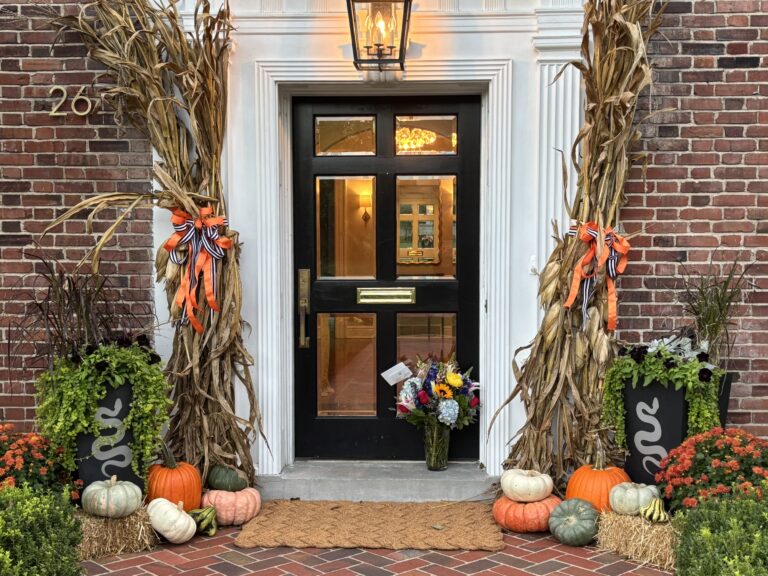

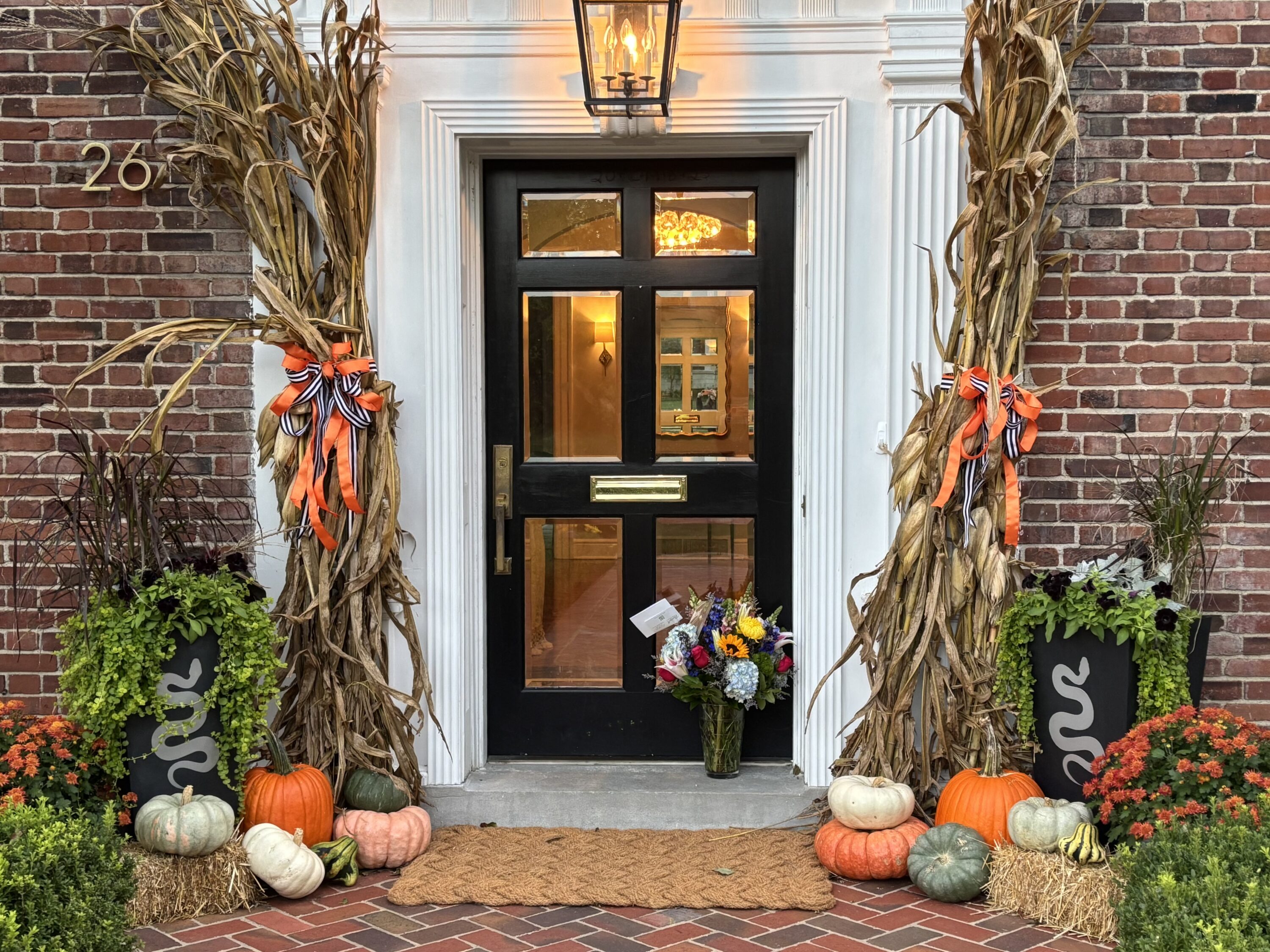
The fastest way to make a St. Louis porch feel like fall is a few well-placed annuals and a handful of decor pieces that work together.
Once the air turns crisp here, summer containers start looking tired. Petunias go leggy, the ferns brown at the edges, and the whole entry reads like August even though it’s October. A fall refresh fixes that in an afternoon.
This guide covers what annual flowers actually are, which ones hold up best in St. Louis fall weather, and how to pair them with Halloween decor you can carry straight through Thanksgiving.
What Are Annual Flowers?
An annual is a plant that completes its whole life in one growing season. It sprouts, blooms, sets seed, and dies, all within a single year. A perennial, by contrast, goes dormant in winter and comes back on its own the following spring.
That sounds like a drawback until you think about what it buys you. Because annuals aren’t trying to survive the winter, they put all their energy into flowering. You get more color, faster, and far more of it than most perennials give you in a single season.
It also means you get to redecorate. Your perennial beds are the bones of your landscape and they stay put. Annuals are the part you swap out two or three times a year, so your entry can look different in May than it does in October.
A quick comparison:
Annuals | Perennials | |
|---|---|---|
Lifespan | One season | Return each year |
Bloom time | Long, often continuous | Shorter window |
Color intensity | High | Varies by plant |
Best use | Containers, borders, seasonal color | Structure and foundation planting |
Flexibility | Change with every season | Stay in place |
For fall, annuals do the heavy lifting. They’re what turns a plain front step into something that feels intentional, and they’re easy to refresh when the season shifts.
Popular Fall Annuals for St. Louis Yards
St. Louis sits in USDA hardiness zone 6b, which gives us a long, mild fall. Warm afternoons, cool nights, and a first frost that usually lands somewhere in late October. That’s a generous window for cool-season color.
These are the fall annuals we plant most often around St. Louis:
Mums (Chrysanthemums) The classic for a reason. They bloom heavily for four to six weeks and come in every fall shade from bronze to deep burgundy. Buy them in tight bud rather than full flower and you’ll get a longer show. Mums are technically perennial, but most garden-center mums are grown as annuals and rarely come back reliably here.
Pansies and Violas The workhorses of fall color. Both shrug off frost, and in a mild St. Louis winter they’ll often hang on until spring. Violas have smaller flowers but produce more of them, which makes them better for filling in around a container’s edge.
Ornamental Kale and Cabbage Texture rather than flowers. The rosettes deepen in color as temperatures drop, going purple, cream, or rose. They look best after the first cold snap, which makes them ideal for a display meant to last into November.
Asters Daisy-like purple and pink blooms that arrive just as the rest of the garden winds down. They’re a favorite with late-season pollinators, so they do real work beyond looking good.
Snapdragons Add height, which most fall containers need. They handle cool weather well and give you a vertical line in a planting that would otherwise sit low and round.
Ornamental Peppers Small, glossy fruit in orange, purple, and black. They read as fall without being floral, and the black varieties are a nice bridge into Halloween decor.
Dusty Miller Silver-gray foliage that makes orange and purple look richer next to it. Strictly a supporting player, but it’s the thing that makes a container look designed instead of just full.
Celosia and Croton Both lean warm. Celosia brings plume-shaped texture, and croton’s bold orange and yellow foliage holds color until the first hard freeze.
A tip on combining them: pick one tall plant, one mounding plant, and one that spills over the edge. Mums or kale in the middle, snapdragons behind, violas or dusty miller around the rim. That structure works in nearly any container size.

When to Plant Fall Annuals in St. Louis
Mid-September through mid-October is the sweet spot. The soil is still warm enough for roots to establish, and the plants have time to settle in before the first frost.
Planting in early October still works well. You’ll just want to water a little more attentively for the first week or two while roots take hold.
A few things that make fall annuals last longer:
- Water more than you think. Fall containers dry out fast on sunny, breezy days, even when the air feels cool. Check the top inch of soil every couple of days.
- Deadhead the mums. Pinching off spent blooms keeps new ones coming and keeps the plant looking tidy.
- Watch the first frost. It usually arrives in St. Louis in late October, though it varies year to year. Pansies, violas, and ornamental kale take it in stride. Mums and celosia will fade after a hard freeze.
- Cover on a cold night. An old sheet draped over containers on the first unexpected freeze buys you a few more weeks.
- Group your containers. Pots clustered together hold warmth and moisture better than ones scattered across a porch.
If you’re planting in the ground rather than containers, a two-inch layer of mulch keeps soil temperature steadier and cuts down on watering.

Halloween Decoration Inspiration, From Elegant to Spooky
Most people land somewhere on a spectrum. One end is a refined harvest look that could stay up through November. The other is full haunted house. Both work, as long as you commit to one.
The Elegant Harvest Look
Quiet, warm, and seasonal rather than themed. Think cream and white pumpkins mixed with deep burgundy mums, bundled cornstalks at the base of a column, and a wreath of dried wheat or eucalyptus on the door.
Stick to a tight palette. Cream, bronze, rust, and deep green read as sophisticated. Skip anything in bright orange plastic.
This is the look that transitions best. Pull one or two Halloween pieces and it becomes a Thanksgiving entry with no extra work.
The Classic Fall Porch
The one most of us picture. Stacked pumpkins flanking the steps, orange and gold mums in galvanized buckets, a hay bale with a few gourds arranged on top, and a corn husk wreath.
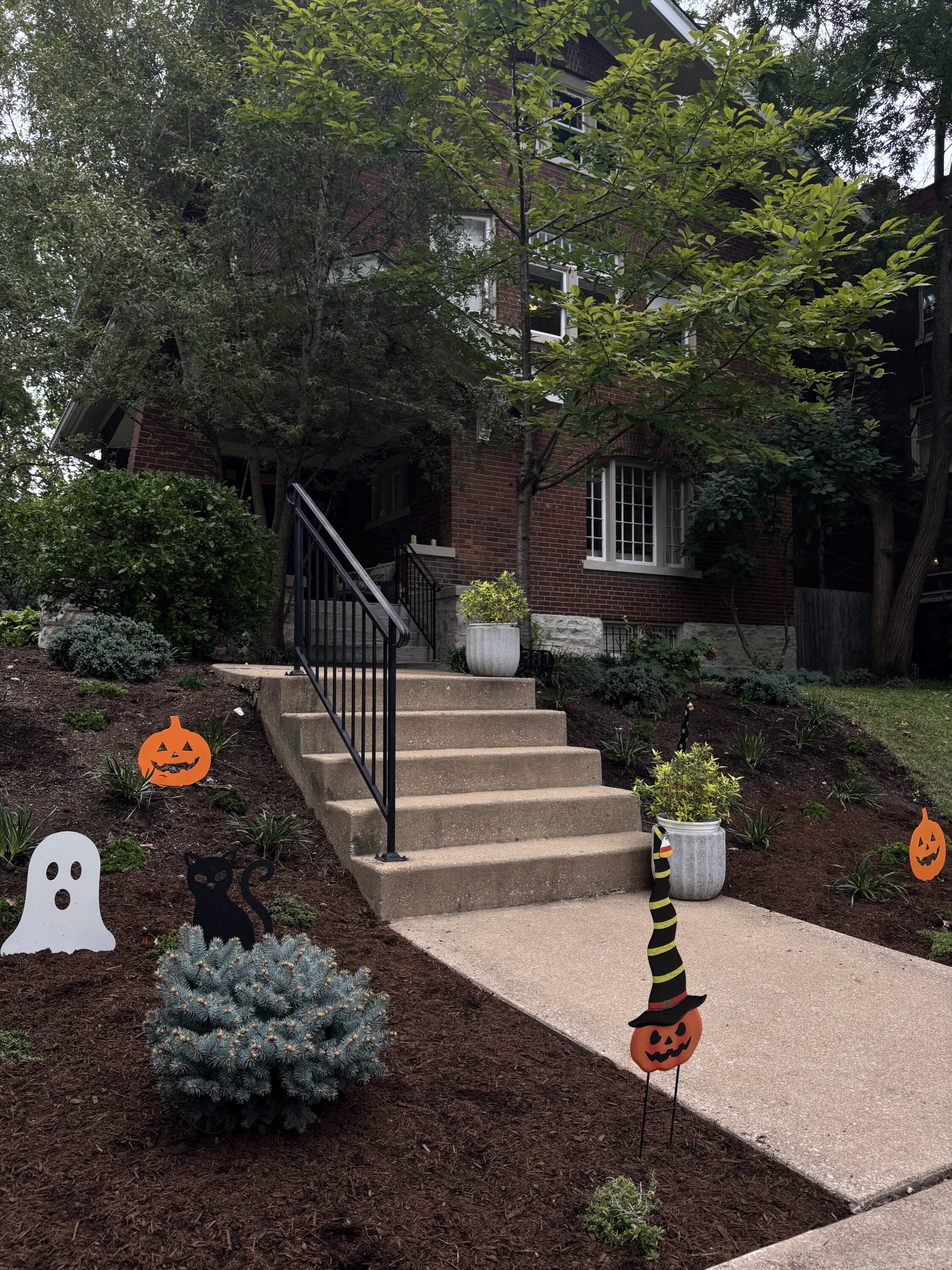
Add a few carved jack-o’-lanterns the week of Halloween and you’ve got the full effect without redoing anything. Battery-operated candles inside them last longer than real ones and hold up to wind.
The Spooky Display
This is where you build a scene rather than arrange decor. Black and deep purple instead of orange. A few bare branches in tall urns, black ornamental peppers and dark kale in the containers, spanish moss draped over the railings.
Fog machines, lighting, and oversized props do the rest. Uplighting a tree in purple or green from below changes the whole mood of a yard for very little money.
One rule worth following: if you’re going spooky, go all the way. A single skeleton next to a pot of yellow mums reads as unfinished. A full commitment reads as a choice.


How to Pair Annuals With Your Decor
The displays that look best are the ones where the plants and the props were chosen together, not bought separately and set side by side.
Start with the palette. Pick two or three colors and let everything follow. If you’re going elegant, that’s cream, burgundy, and bronze. For a classic porch, orange, gold, and deep green. For spooky, black, purple, and a single acid green as an accent.
Match the plants to the mood.
Look | Annuals that fit | Decor that fits |
|---|---|---|
Elegant harvest | Burgundy mums, ornamental kale, dusty miller | White pumpkins, dried wheat, cornstalks |
Classic fall | Orange and gold mums, celosia, croton | Carved pumpkins, hay bales, gourds |
Spooky | Black ornamental peppers, dark kale, bare branches | Black urns, spanish moss, uplighting |
Build in layers. Tall elements at the back, containers at mid-height, pumpkins and gourds on the ground. A flat arrangement where everything sits at one level never looks finished.
Repeat, don’t scatter. The same container on both sides of the door, or the same pumpkin shape at three heights along the steps. Repetition is what makes a display feel designed.
Don’t forget lighting. Days get short fast in October, and most people see your porch after dark. A couple of uplights, some string lights along the railing, or lanterns on the steps will do more for the overall effect than another pumpkin will.
Make It Last From Halloween Through Thanksgiving
You don’t have to choose between a Halloween display and a Thanksgiving one. Plan it right and the same setup carries you from early October to late November with one small swap.
The trick is to split your display into two parts. The base layer is everything seasonal and neutral. The top layer is the handful of pieces that are specifically Halloween.
Keep in place all season:
- Mums, kale, pansies, and violas
- Uncarved pumpkins and gourds
- Cornstalks, hay bales, and dried arrangements
- Containers, urns, and lighting
Swap out on November 1:
- Carved jack-o’-lanterns, which have usually gone soft by then anyway
- Skeletons, spiders, and anything black
- Halloween wreaths and door signs
Then add a few warmer touches for Thanksgiving. A wreath in dried wheat or oak leaves, white pumpkins mixed in among the orange, and a basket of apples or squash near the door.
Uncarved pumpkins keep for weeks on a cool porch, so most of what you buy in early October is still going strong at Thanksgiving. Carved ones last about five to ten days once they’re cut, which is why it’s worth waiting until the week of Halloween to carve.
If you’d rather go all in on Halloween, that’s a perfectly good choice too. Just know ahead of time which it is, since a display built to transition looks different from one built to be as spooky as possible.

Frequently Asked Questions
When should I plant fall annuals in St. Louis? Mid-September through mid-October works best. Early October planting is still fine, you’ll just want to water a little more closely for the first week or two.
Will my mums come back next year? Usually not. Garden-center mums are bred for a heavy fall bloom rather than winter survival, so most St. Louis gardeners treat them as annuals. Hardy garden mums planted in the ground in spring have a better chance.
What fall flowers survive frost? Pansies, violas, and ornamental kale handle frost well and often last into winter here. Mums, celosia, and croton fade after a hard freeze.
How long do pumpkins last on a porch? Uncarved pumpkins keep for several weeks in cool weather. Once carved, expect about five to ten days, which is why it’s best to wait until the week of Halloween.
Can I use the same display for Halloween and Thanksgiving? Yes. Keep your annuals, uncarved pumpkins, cornstalks, and containers in place, then swap out the Halloween-specific pieces on November 1 and add a few warmer touches.
How often do fall containers need water? Check the top inch of soil every couple of days. Containers dry out faster than you’d expect on sunny, breezy fall days, even when the air feels cool.
What’s the difference between an annual and a perennial? An annual completes its whole life in one season and doesn’t return. A perennial goes dormant in winter and comes back the following spring.
Let Us Handle the Fall Refresh
If you’d rather come home to a finished porch than spend a Saturday hauling pumpkins, we can take care of it.
Our team plants fall annuals and installs seasonal decor for homeowners across the St. Louis area. We’ll help you pick a look, whether that’s a refined harvest entry or something the trick-or-treaters talk about, and build it to carry through Thanksgiving if you want it to.
Fill out the form below to book a consultation. We’ll come take a look at your space and put together a plan.