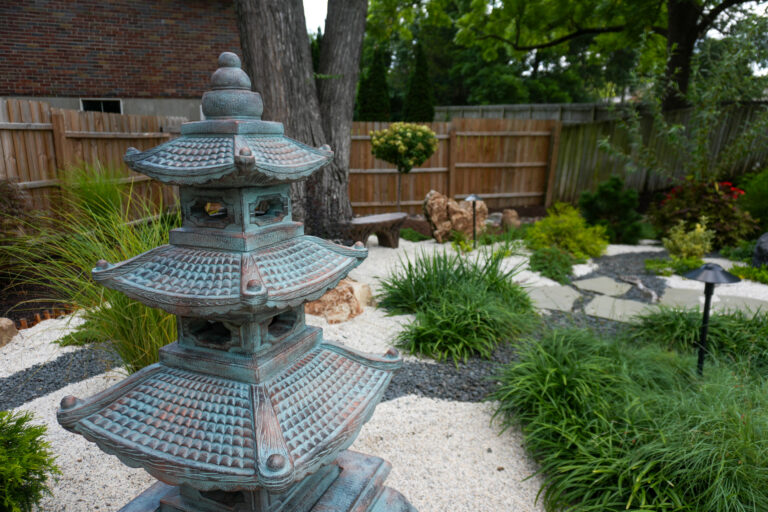

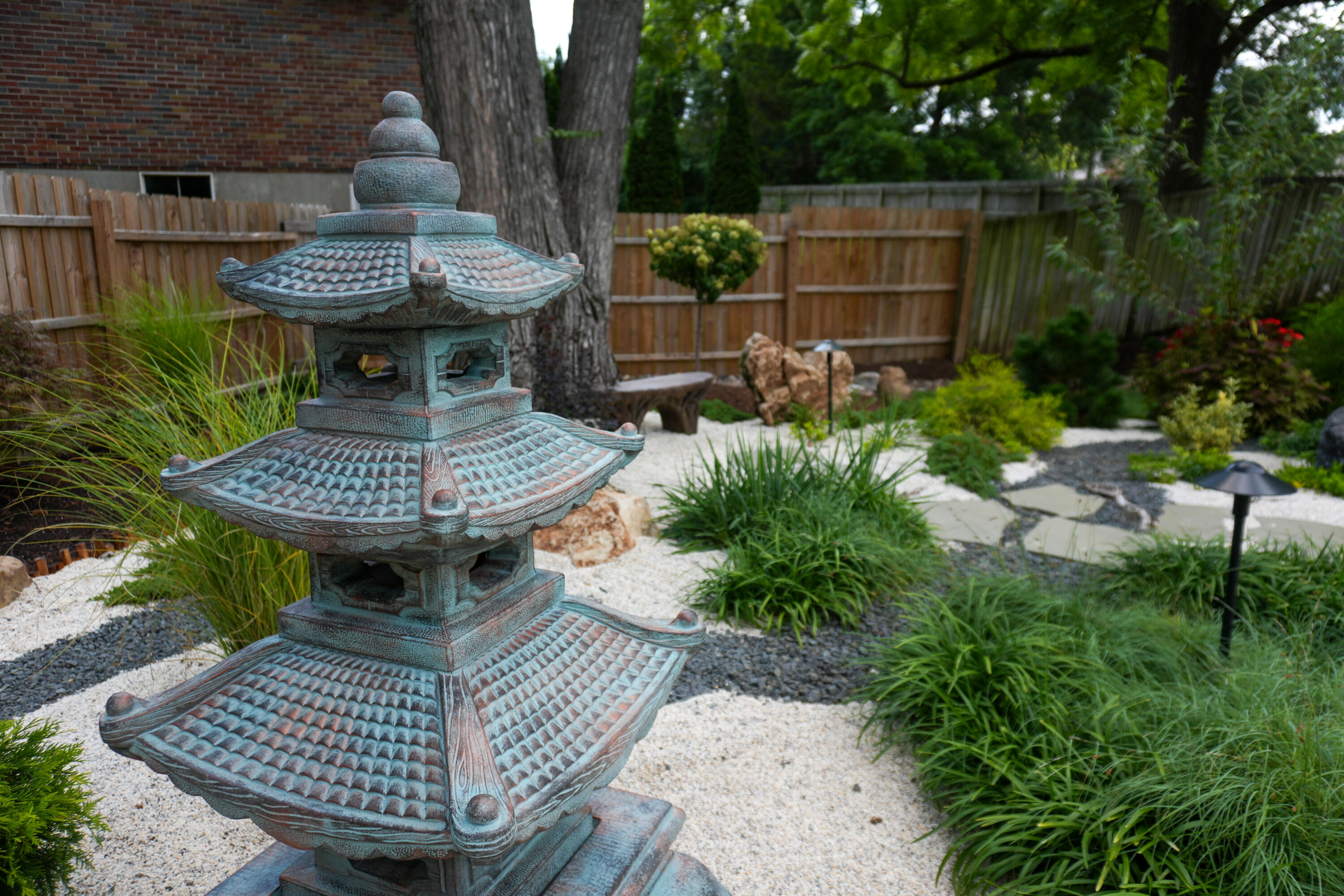
When a St. Louis homeowner came to Quiet Village Landscaping with a vision for a true zen garden, we knew this project would be more than a typical landscape renovation. They wanted a space that felt calm, intentional, and rooted in the principles of Japanese garden design. What we ended up creating was a full-property transformation: a dry rock river winding through both the backyard and front yard, framed by boulders, ornamental grasses, statement evergreens, Japanese maples, and authentic Japanese garden accents.
Here’s how the project came together, and why zen gardens are becoming one of the most requested outdoor living styles for St. Louis homeowners.
Starting With the Homeowner’s Vision
Every great outdoor space starts with a conversation. This homeowner had a clear picture in mind: a garden that felt peaceful, uncluttered, and connected to nature, something closer to a retreat than a typical backyard. Rather than jumping straight into materials and plant lists, our design team spent time understanding what “zen” meant to them specifically. For this couple, it meant clean lines, natural stone, the sound and visual movement of water (real or implied), and a sense of quiet structure rather than a busy, overplanted look.
That vision became our north star for the entire project.
Phase One: Transforming the Backyard Pool Deck
The backyard was the heart of this project. The homeowners’ pool deck needed a backdrop that felt as serene as the water itself, so we designed a dry rock river bed that wraps around the pool area, creating movement and visual flow without competing with the pool as the focal point.
Key elements of the backyard phase included:
- A dry rock river, using a mix of river rock sizes and colors to mimic the natural movement of flowing water
- Large boulders placed strategically along the river’s path to anchor the design and create a sense of permanence and scale
- Ornamental grasses for texture and gentle movement in the breeze, softening the hardscape
- Statement evergreens to provide year-round structure and privacy
- Japanese maples, prized for their sculptural form and seasonal color, planted as focal points near key sightlines from the pool deck
- Japanese garden decor, including a pagoda for shaded seating and shelter, along with decorative bird accents that added movement and life to the space
The result is a poolside environment that feels less like a backyard and more like a private escape, exactly what the homeowners had envisioned from day one.
Phase Two: Extending the Vision to the Front Yard
Once the backyard was complete, the homeowners wanted the same sense of calm to greet them (and their guests) from the moment they pulled into the driveway. For phase two, we extended the rock river concept into the front yard, creating a cohesive design language across the entire property.
We carried forward the same core elements, boulders, grasses, and Japanese maples, while adapting the layout to fit the front yard’s different sightlines and sun exposure. The result ties the whole property together. Whether you’re relaxing by the pool or pulling into the driveway after work, the same sense of intentional, balanced design carries through.
What Makes a Zen Garden a Zen Garden?
Zen gardens, rooted in Japanese design traditions, are built around a few core principles: simplicity, balance, and a deep connection to nature. Unlike more traditional American landscape designs that often prioritize color and abundance, zen gardens focus on restraint. Every element, from a single boulder to the placement of a tree, is chosen with intention.
Common features of a zen-inspired landscape include:
- Dry rock rivers or gravel beds, symbolizing flowing water without requiring an actual water feature
- Large, natural boulders, representing mountains, islands, or permanence within the landscape
- Ornamental grasses, adding movement and softness that mirrors wind and water
- Evergreens and Japanese maples, chosen for their form as much as their color, providing structure through every season
- Minimal, curated plantings rather than dense, overflowing beds
- Japanese architectural elements, like pagodas, stone lanterns, and gates, that provide structure and a sense of place
- Wildlife accents, such as decorative birds, that bring a subtle sense of life and movement
The Four Elements in Zen Garden Design
Traditional Japanese garden philosophy often draws on the four classical elements, earth, water, air, and fire, even when those elements aren’t literally present. Understanding how each one shows up in a zen garden helps explain why these spaces feel so grounding.
Earth is represented through boulders, stone, and the garden’s overall structure. Large rocks anchor the design and give it a sense of permanence, much like mountains anchor a landscape.
Water is often present symbolically, especially in dry rock rivers like the one we designed for this project. The flow of the rocks mimics the movement of a stream, offering the calming visual effect of water without the maintenance of a literal water feature. When a real water element is included, it’s typically still and reflective rather than loud or dramatic.
Air shows up in movement, most often through ornamental grasses swaying in the breeze, or through open, uncluttered spacing that lets the garden breathe. Good zen garden design leaves room between elements rather than filling every inch.
Fire, the least literal of the four, is often represented through light, sun exposure, and warmth, or subtly through stone lanterns that historically held flame. In modern designs, this can translate to how sunlight filters through Japanese maples or hits a boulder at different times of day.
Why St. Louis Homeowners Are Drawn to Zen Garden Design
For many homeowners, a zen garden isn’t just about aesthetics. It’s about creating a space that offers a break from the noise of everyday life. St. Louis’s four distinct seasons actually make zen garden elements especially rewarding: Japanese maples put on a stunning color show in the fall, evergreens keep the structure alive through winter, and ornamental grasses add movement from spring through the first frost.
Zen gardens also tend to be lower maintenance than more traditional, plant-heavy landscapes, since the design leans on stone, structure, and a smaller number of well-placed plants rather than dense beds that need constant upkeep.


Bringing Balance to Your Own Outdoor Space
This zen garden project is a great example of what’s possible when a homeowner’s vision and thoughtful design come together in phases. Starting with the backyard pool deck let this family enjoy the impact immediately, and extending the design to the front yard gave the entire property a cohesive, intentional feel.
If you’re dreaming of a calmer, more balanced outdoor space, whether it’s a full zen garden or just a few elements that bring more peace to your yard, Quiet Village Landscaping would love to help you bring that vision to life right here in St. Louis.