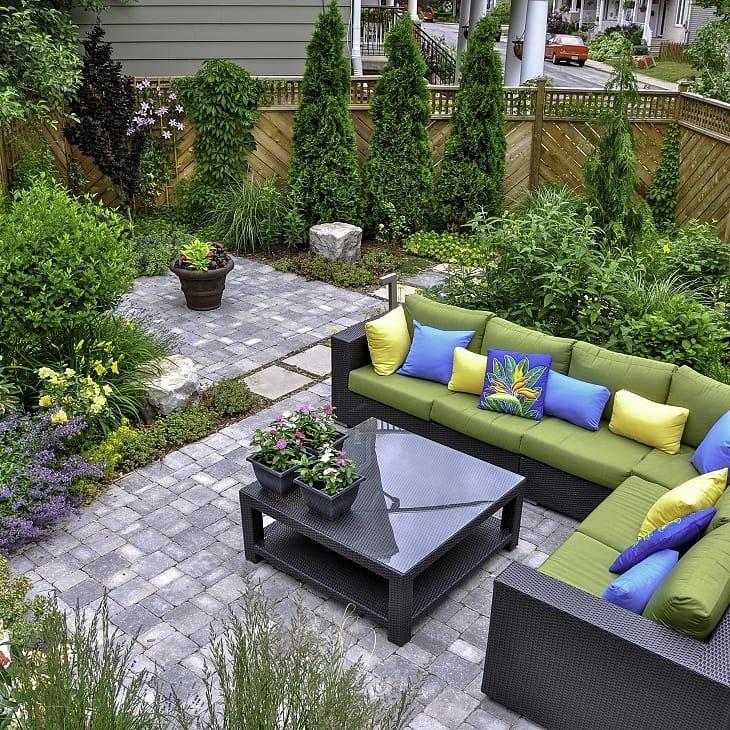

If you are planning on building a patio or outdoor living space in St. Louis, there are some things you need to consider before you go ahead with this construction project.
In this post, we cover some of the key decisions you will need to make, including drainage, sizing, and materials. Here is everything you need to know:
Choose the materials that are right for the climat
You’ll want to start this process by choosing materials that are right for the St. Louis climate, not those that just look good in a catalog. Hardscaping and landscaping in the region is brutalized by the climate. Hot summers with heavy downpours, followed by winter freeze-thaw cycles, can be harmful and allow moisture to enter every joint.
Poured concrete can be a cost-effective option, but proper installation, drainage, and consideration of freeze-thaw conditions are important to help minimize cracking. Natural stone costs more, but it delivers a high return on investment thanks to its beautiful texture and longevity.
Be careful with finishes. During the summer, it’s better to have textured surfaces, as these often remain cooler underfoot.
Consider drainage before anything else

For St. Louis residents, drainage is another critical consideration. St. Louis receives significant rainfall throughout the year, so your patio requires the right solution. The area sits on a bed of heavy clay and holds onto water instead of letting it go. If you decide to drop a large surface onto this without a plan, you are going to wind up with issues months or years down the road.
Therefore, start by ensuring your patio slopes away from the house at roughly 1/4 in. per ft. This allows water to shed quickly and move toward a dry creek bed, drain, or regrading. Sometimes you need to also install retaining walls if there’s a grade change on your lot. This prevents land from moving as much, especially after heavy rainfall.
Size the space according to how you’ll use it
Next, think carefully about how to size your space according to how you’ll use it.
If you’re just planning on sitting outdoors with one or two family members, you don’t need a huge area. But if you need a fire pit and a large dining table for entertaining guests, you’ll want something that’s at least 30 ft by 20 ft.
Work with the landscape you already have
Another pro tip is to work with the scenery you already have when building a patio or outdoor living space. If there are mature trees in the area, consider them an asset instead of paving over them. Try to avoid their root zones if possible, as this can become a trip hazard and damage your hardscaping later as the trees grow.
Look for where the sun falls during the hours that you’ll be outside, too. Check where it is in the evenings and whether it shines on your patio or outdoor living area.
Get a professional to evaluate your site
The most powerful thing you can do is get a professional to evaluate your site. Every property is individual and specific, so you need an expert consultation to let you know the best options for you.
Quiet Village Landscaping has been designing outdoor living spaces since 2001. Talk to us today for an estimate.