

Why Your Yard Floods After Every Storm
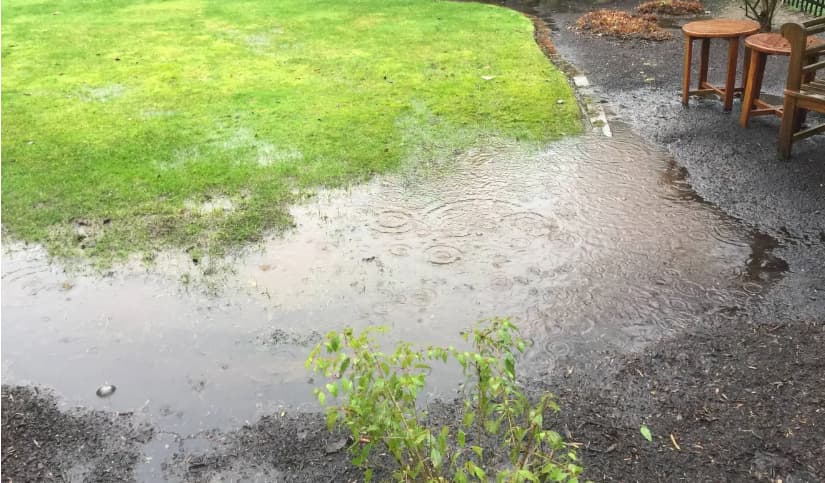
After a heavy rain in St. Louis, standing water, soggy grass, and runoff head straight toward your home.
It’s not bad luck. It’s physics.
With the region’s natural slopes and increasingly intense rain events, water moves quickly across properties. Too much rain, too fast, can overwhelm soil absorption and existing drainage systems.
But what is drainage, really?
Drainage is how water is controlled and directed across your property. It should help move water away from your home, your foundation, and your landscape. When it’s working properly, you don’t notice it. When it fails, you see it immediately.
Common causes of lawn flooding:
- Poor grading around the home
- Clay-heavy soil that drains slowly
- Short or improperly placed downspouts
- Compacted lawn areas from foot traffic or equipment
- No dedicated drainage system
The Real Risk of Ignoring Drainage Problems
A flooded yard is more than a muddy mess (it’s a warning sign).
With repeated storms becoming more frequent in the St. Louis area, unmanaged rainwater can lead to:
- Foundation damage
- Basement leaks or flooding
- Soil erosion and landscape loss
- Mosquito breeding zones
- Dead or diseased grass
Most foundation problems start with one issue: water sitting where it shouldn’t be.
Recent storms have already pushed local officials to warn residents about flood risks and preparedness.
The Most Effective Drainage Solutions (Ranked)
1. French Drains (Best Overall Solution)
A French drain is the gold standard for managing excess water underground.
How it works:
- A PVC pipe is installed below grade
- Surrounded by gravel to collect water
- Redirects water away from your yard and foundation
Best for:
✔ Persistent soggy areas
✔ Water pooling near foundations
✔ Sloped properties
2. Downspout Extensions & Burial
Your gutters might be doing their job—but your downspouts could be the real problem.
If water dumps right next to your foundation, you’re essentially recycling the issue.
Fix:
- Extend downspouts 10–20 feet away
- Or bury them underground and redirect flow
Best for:
✔ Foundation protection
✔ Preventing basement leaks
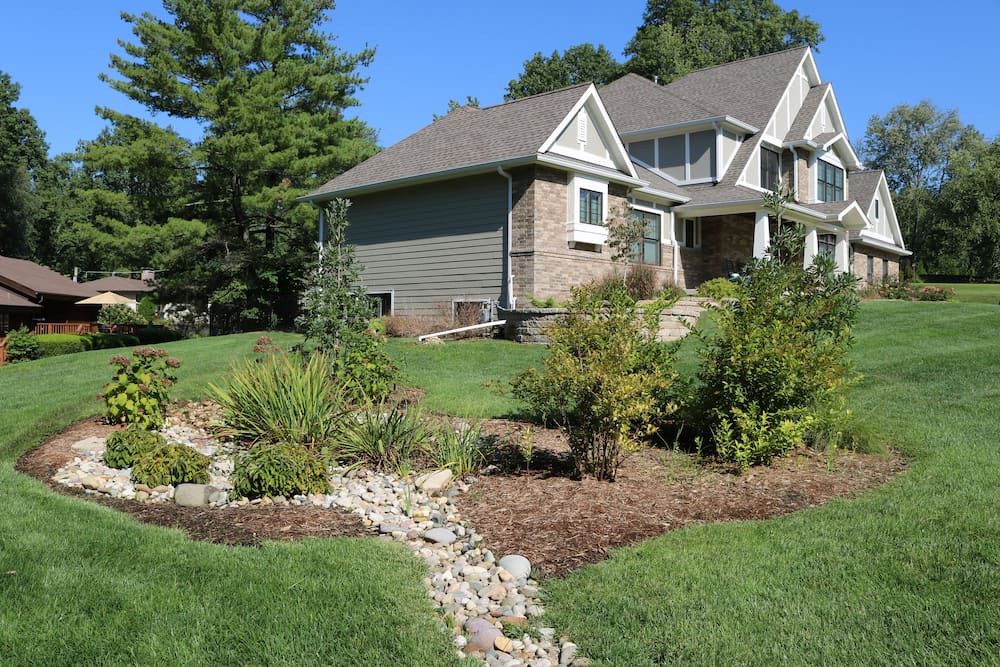
3. Dry Creek Beds (Functional + Beautiful)
Think of this as drainage disguised as design.
A dry creek bed:
- Channels water naturally across your yard
- Prevents erosion
- Adds visual interest to your landscape
Best for:
✔ Managing visible runoff paths
✔ Enhancing curb appeal
4. Lawn Regrading
Sometimes the issue isn’t the water, it’s the direction it flows.
Regrading reshapes your yard so water moves away from your home instead of toward it.
Key principle:
- Everything should slope away from your house.
- That slope (called grade) determines where water goes every time it rains.
Best for:
✔ New construction fixes
✔ Major drainage corrections
(Dry Creek Bed in St. Louis)
Our Plan of Action (How We Solve It)
At Quiet Village Landscaping, drainage isn’t a one-size-fits-all fix.
We treat it like a system.
Here’s how we approach it:
- Evaluate water flow patterns after rain
- Identify problem zones (pooling, runoff, erosion)
- Design a system that works with your entire property and landscape
- Install integrated solutions (not just a quick fix)
We start with two key questions:
- Where is the water coming from?
- Where is it going, and where should it go instead?
From there, we build a solution using a combination of:
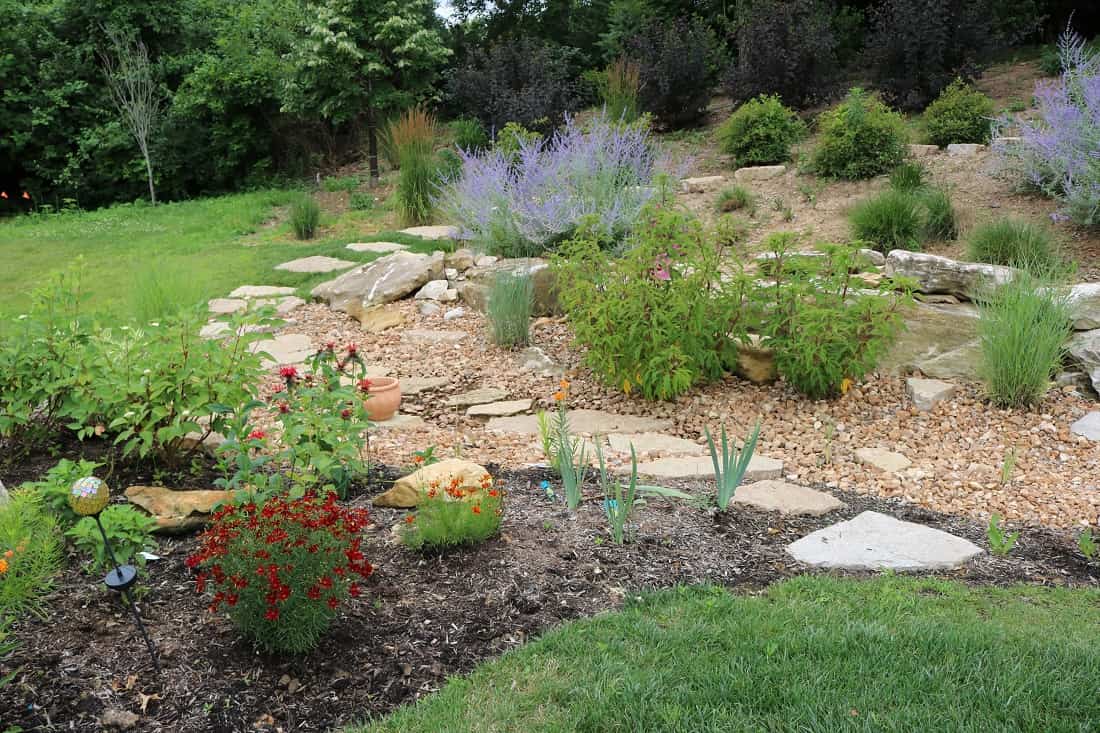
- Swales (natural low areas that guide water)
- Berms (raised areas that redirect flow)
- French drains and underground piping
- Decorative solutions like dry creeks and rain gardens
What sets us apart:
★ We use a Smart Level system to digitally measure grade and ensure water flows correctly
★ We install smooth-wall PVC pipe (not corrugated) because it lasts longer and won’t clog
★ We protect your existing landscape during installation (not tear through it)
Self-Guided Drainage Check (What to Look For After Rain)
Want to know if your property has a drainage problem?
Walk your yard after a storm and look for:
- Standing water that lasts more than 24 hours
- Wet or muddy areas near entrances (tracking dirt into your home)
- Water collecting near your foundation
- Downspouts dumping water too close to the house
- Erosion, exposed roots, or shifting mulch
- Low spots where water naturally collects
Also pay attention to how your yard is shaped:
- Does the ground slope toward your house?
- Are there natural dips (swales) guiding water or blocking it?
- Are there high spots (berms) helping direct flow or trapping it?
If water isn’t being guided intentionally, it will find its own path, and it’s usually not where you want it.

