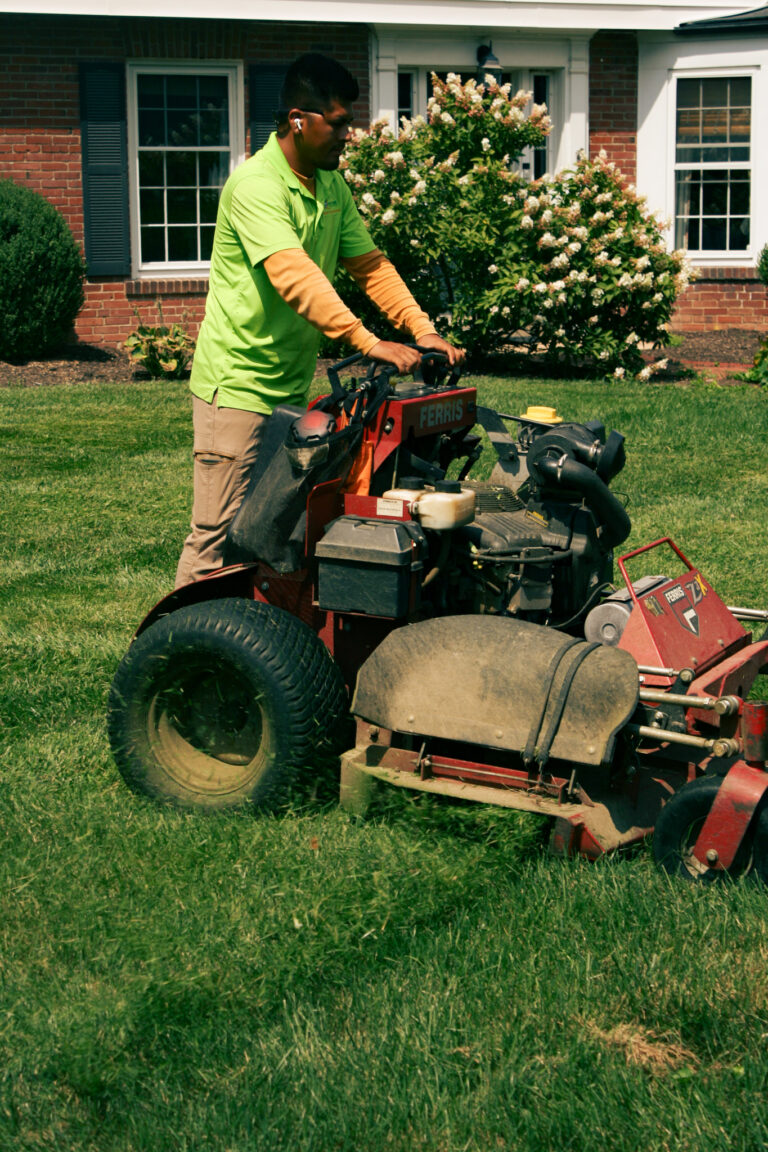

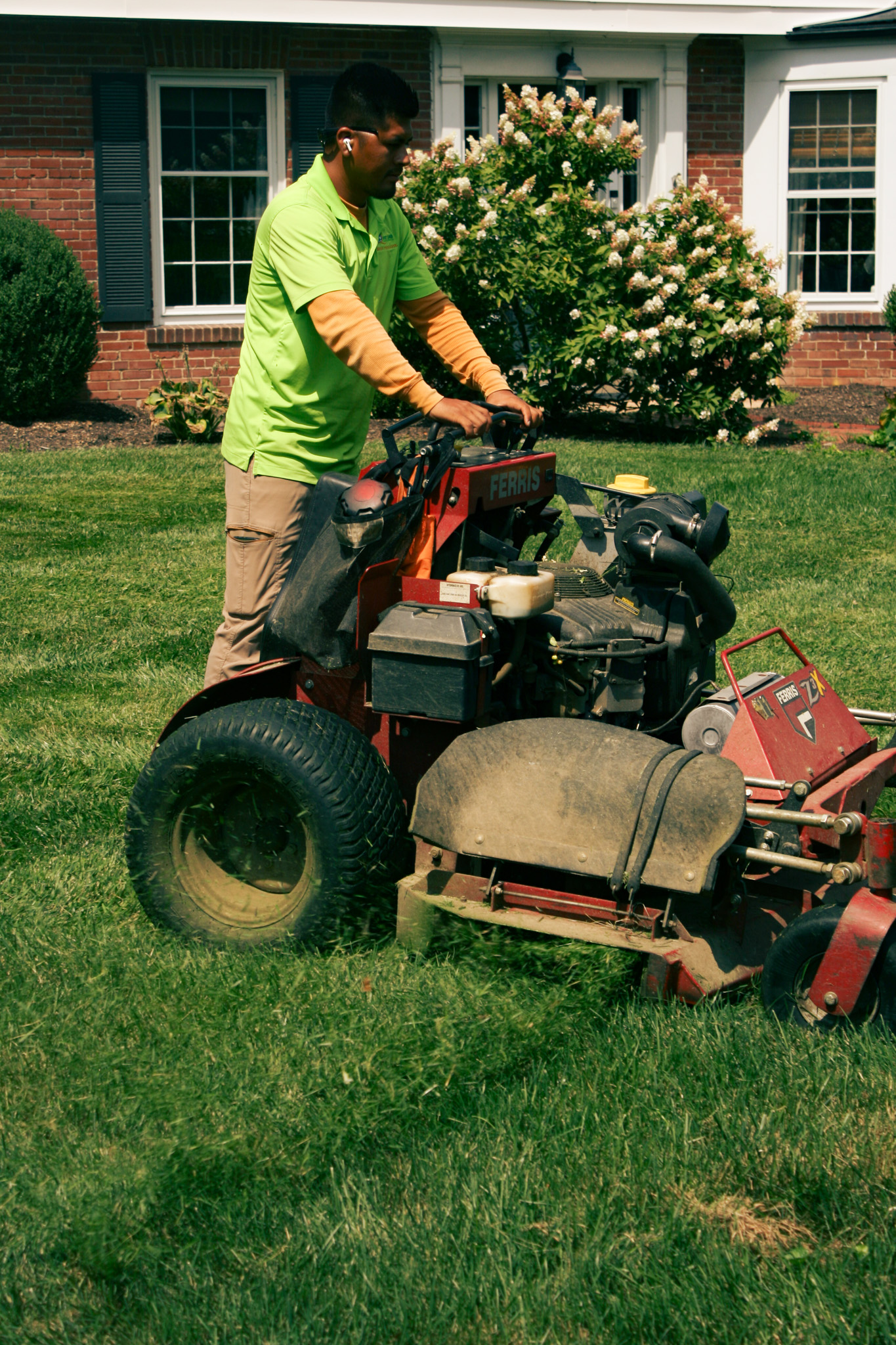
If your lawn’s growth has slowed way down over the last couple of weeks, you’re not imagining it, and you’re not doing anything wrong. St. Louis just went through one of the trickier lawn care transitions we see: a wet summer that suddenly gave way to drought.
Here’s what’s happening, and why the right move for a lot of lawns right now is actually to mow less.
A Wet Summer, Then a Hard Stop
Through most of summer 2026, St. Louis got plenty of rain. Lawns were growing at a steady, predictable clip, and mowing schedules that worked in June and July kept working right through most of August. Then things shifted. Rain stopped, heat climbed, and a lot of homeowners are now looking at grass that just isn’t growing the way it was a few weeks ago.
That’s the tricky part about this kind of transition. A mowing pattern built around a wet summer doesn’t hold up once the ground dries out. Less rain means less growth, and less growth means your lawn simply doesn’t need to be cut as often, or as aggressively, as it did a month ago.
Why We’re Taking a Week Off Mowing
With grass growth slowed or stalled by the drought, we’re giving lawns a week off from mowing. When a lawn isn’t actively growing, running heavy mowing equipment over it adds stress without adding any benefit. Skipping the cut lets stressed grass hold onto the energy and moisture it has left instead of spending it on recovery from a mow it didn’t need.
The timing works out well for another reason too. Our full lawn care clients aren’t scheduled for mowing this week regardless, since their lawns were aerated and overseeded last week. Aeration pulls small plugs of soil out of the lawn so seed, water, and nutrients can reach the roots more easily instead of getting stopped by compacted ground. Combined with drought stress, that’s a lawn that needs a quiet week more than it needs a mow.
What This Means for Your Lawn
If your grass has clearly slowed down or gone dormant, the best thing you can do is leave it alone. Mowing dormant or drought-stressed grass doesn’t help it recover faster. It just adds mechanical stress on top of what the heat and dry soil are already doing.
That said, every lawn is handling this differently right now. Some yards still have enough moisture to keep growing at a slower pace, and a light mow can still make sense for those. The key is to actually look at your lawn before deciding. If it’s still putting out visible growth, a mow is fine. If it’s browning, going crunchy, or clearly dormant, hold off. Mowing a dying lawn is just extra stress it doesn’t need.
Don’t Forget the Water Side of This
Mowing is only half the equation. When conditions are this dry, your lawn also needs more frequent watering to have any chance of holding on through the heat. We broke down exactly how to adjust your watering schedule for what St. Louis is dealing with right now in our other post: St. Louis Drought: Why Your Lawn Needs More Water Right Now.
Keep an Eye on Things
The best thing any St. Louis homeowner can do this week is simply watch their lawn. Growth patterns are changing fast right now, and the right call, mow or don’t mow, really does depend on how your specific lawn is holding up. If you’re not sure what you’re looking at or want a second opinion, we’re happy to take a look.